Force of Evil
1948
Crime / Drama / Film-Noir
Force of Evil
1948
Crime / Drama / Film-Noir
Director
Top cast
Tech specs
720p.BLU 1080p.BLUMovie Reviews
The pieces are greater than the whole
One of the classic noirs, with a great performance by John Garfield
Joe Morse (John Garfield) is a smart, cocky New York lawyer, and as corrupt as they come. "This is Wall Street," Joe tells us at the start of Force of Evil, "and today was important because tomorrow, July Fourth, I intended to make my first million dollars. An exciting day in any man's life. Temporarily, the enterprise was slightly illegal. You see, I was the lawyer for the numbers racket." Joe has a problem. His older brother, Leo (Thomas Gomez), runs a neighborhood numbers operation. Leo is a decent small-timer with a bad heart who worked his tail off so that Joe could go to law school. He knows his brother for what Joe is, a slick legal crook. Joe is in partnership with a tough gangster, Ben Tucker. They plan to break the banks of the small numbers operations, then move in and consolidate them under their own hand. They'll make millions. Joe realizes his brother will be ruined and tries to save him. Events begin to spin out of Joe's ability to control them. Joe finally finds a conscience, but only after people die.
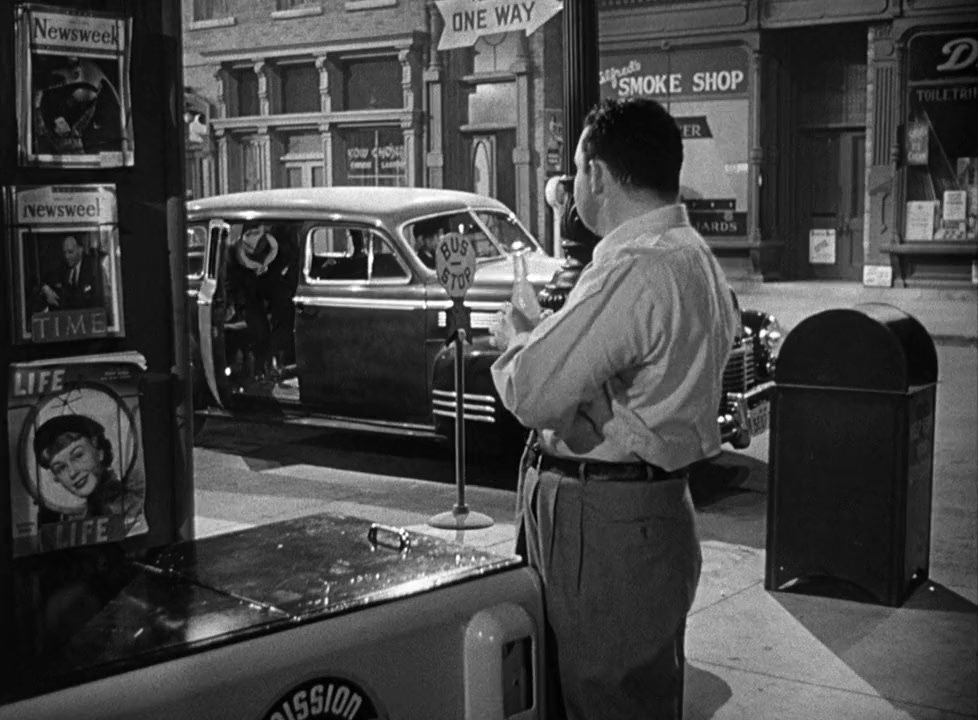
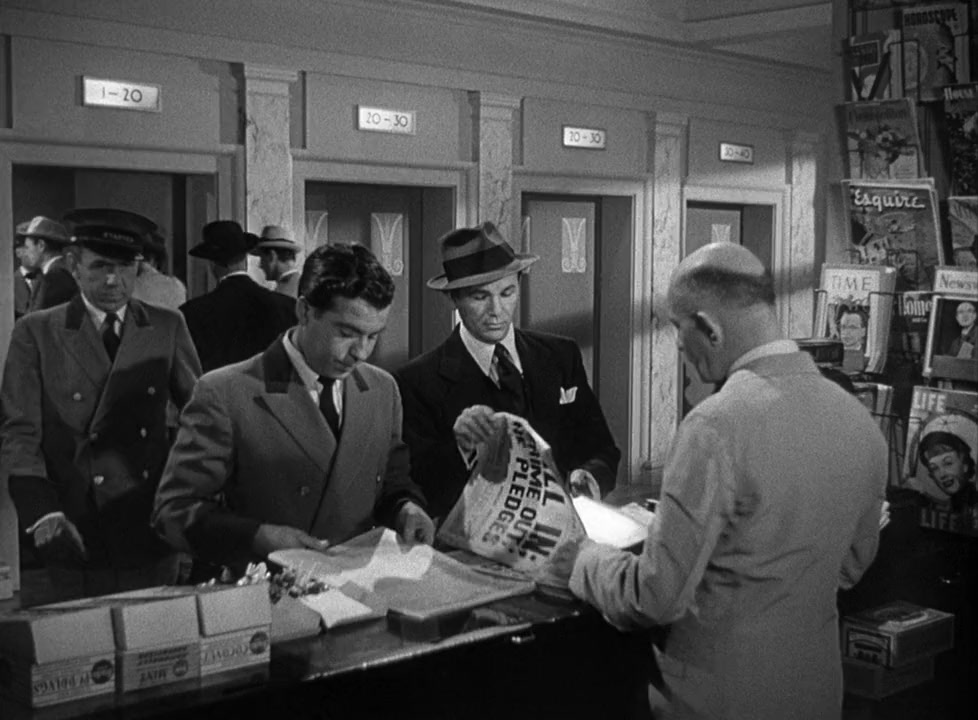
There are a lot of elements that work in this movie. The screenplay by Abraham Polonsky and Ira Wolfert centers squarely on Joe's character and his dilemma. There's no let-up for Joe as his life of legal crime slides into real crime and tightens around him. The script is not exactly poetic, that would make it self-conscious, but it is tough, thoughtful and vivid. Polonsky's direction packs a lot of action into only 82 minutes. You need to pay attention, but it all makes sense. The movie looks gritty and bleak, from the crummy apartment where Leo runs his numbers operation to the empty New York streets at dawn to the sad but redemptive scene on the banks of the East River under the bridge. There are lots of low-angle shots that emphasize the essential emptiness of Joe's character. The movie also is well cast. Some of the actors I particularly enjoyed are Howland Chamberlain as a frightened, weak numbers accountant; Paul McVey as Joe's experienced law partner; Roy Roberts as Joe's business associate, Ben Tucker, a gangster who is more ruthless than Joe thought; and Marie Windsor in a small but memorable performance as Tucker's slow-talking, smoldering wife.
More than anything, the movie depends on the excellent performances of John Garfield and Thomas Gomez. Gomez has to play a sick, excitable, overweight small-time crook who has a bedrock decency. "The money I made in this rotten business is no good for me, Joe." he says. "I don't want it back. And Tucker's money is no good either." Joe just looks at him. "The money has no moral opinions," he tells Leo. Leo stares at his brother. "I find I have, Joe. I find I have." Gomez has to show his complete disdain for what his brother has become but still show us there's some strength left in the relationship. Garfield is the center of the movie. He was an actor who looked tough and sounded tough, yet he was able in his movies to show enough vulnerability not to alienate the audience. He not only had a lot of charm when he wanted to show it, he knew his craft and was good at it.
The movie also is resonant because we know what happened to Polonsky and Garfield as a result of the Communist witch hunts that overtook Hollywood during the late Forties and Fifties. Polonsky was an outspoken and enthusiastic Marxist. It's no accident that Force of Evil can be seen as a parable for Big Business squeezing out the hard-working little guys. When Polonsky refused to testify before the House un-American Activities Committee, his career vanished. He continued to write screenplays but only under assumed names. It took 21 years before he was permitted to direct another film. Garfield suffered perhaps a sadder fate. He came from a poor, working class background and had always been a strong supporter of the working man. He'd never been a Communist but he had supported liberal causes. Garfield was as politically naive as a deer who has a target tattooed on his side. He agreed to testify before HUAC but refused to offer any names of people the committee wanted to know were Communist sympathizers. He was unofficially blacklisted. He had become a major star in the Forties, but the job offers suddenly dried up. He made a couple of so-so movies, then tried to re-establish himself on Broadway. He was mystified and depressed at what was happening to him. He died of a heart attack in 1952 at 39.