Mirror

1975 [RUSSIAN]

Action / Biography / Drama

56
Rotten Tomatoes Critics - Certified Fresh 100% · 30 reviews
Rotten Tomatoes Audience - Upright 91% · 5K ratings
IMDb Rating 7.9/10 10 57027 57K

Top cast

Anatoliy Solonitsyn as Forensic doctor
Margarita Terekhova as Natalya / Maroussia - the Mother
Oleg Yankovskiy as The Father
Ilene Woods as Scrub Woman
720p.BLU 1080p.BLU
892.53 MB
1042*720
Russian 2.0
NR
23.976 fps
1 hr 47 min
Seeds 16
1.69 GB
1552*1072
Russian 2.0
NR
23.976 fps
1 hr 47 min
Seeds 100+

Movie Reviews

Reviewed by frankde-jong 7 / 10

A very personal film

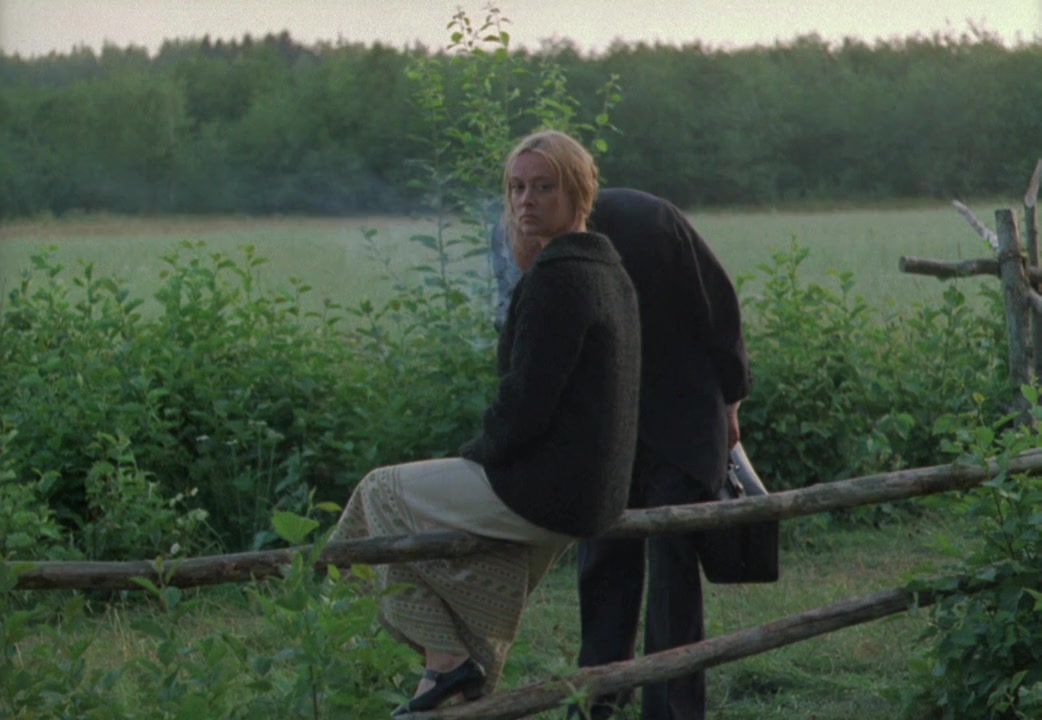
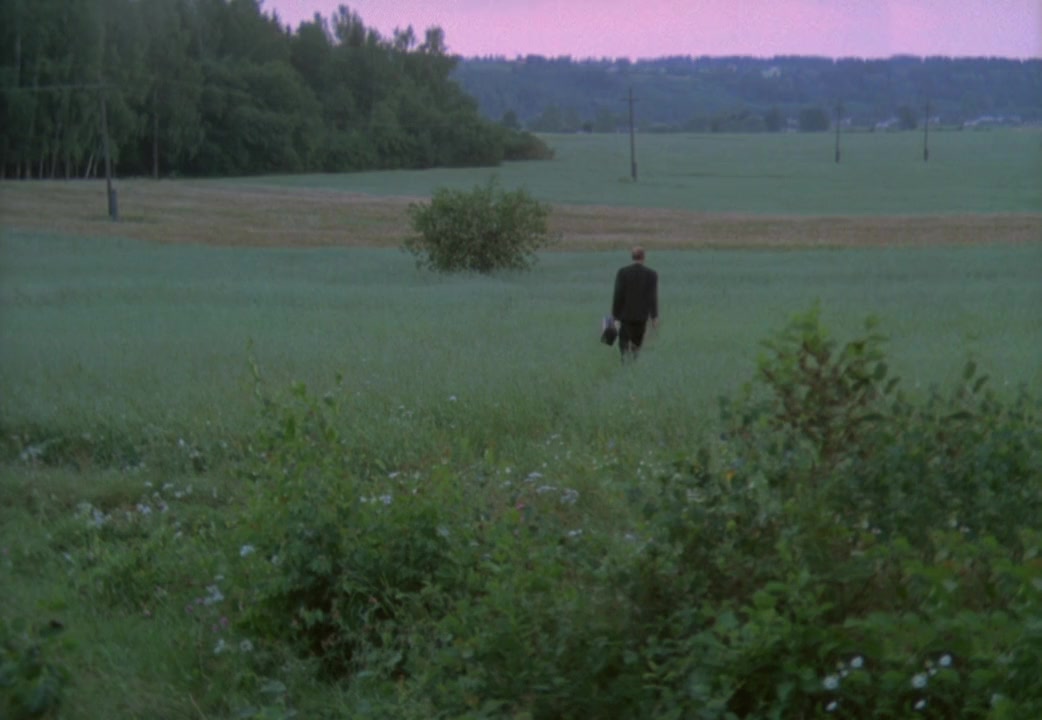
"The mirror" is film with strong autobiographical elements. It gives an impression of the life of Alexei, who in reality stands for Andrei Tarkovsky himself. The film gives this impression by alternating between scenes were Alexei is 5 years old, 12 years old and a grown up man. The film also contains historical footings from the above mentioned periods. Adding to all this, different characters are sometimes played by the same actor / actress. This applies to the mother of Alexei when he is a child and the wife of Alexei when he is grown up. It also applies to Alexei at 12 years old and the son of Alexei as a grown up. As a result the storyline (if any) is difficult to follow, even for Tarkovski standards.The film is however also a very personal one. During the film different poems are recited (written & spoken) by Arseny Tarkovsky, the father of Andrei. The mother of Andrei plays the mother of the grown up Alexei.As usual in a Tarkovsky film there are very beautiful images. Very Russian ones such as wooden dacha's on the countryside, but also trademark Tarkovsky images such as a burning barn (see also "Sacrifice" (1986)) and drizzle dripping inside a building (see also "Stalker" (1979) and "Nostalghia" (1983)). The most remarkable image for me however was that of a young woman wih soaking wet hair after washing. It almost seems the ultimate inspiration for "Ringu" (1998, Hideo Nakata).
Reviewed by

Reviewed by WondrousMoose 9 / 10

The Mirror is a haunting and deeply personal look at the life and memories of a dying man.

Film is a unique medium in that it communicates to us through our two most important senses, sight and sound. By these mechanisms, we experience much of the world around us, and by their reflections, we hold our memories of those experiences. Film is then in a special position to present the thoughts, beliefs, and actions of a character or characters by a creator talented enough to convey them. This can, of course, come in the form of a thrilling action movie with scenes and dialog that stick with us long after we see them, and in its purest form, it can come as an expression of the inner workings of someone's mind.

The Mirror, the fourth feature film of the Russian master auteur Andrei Tarkovsky, is a semi-autobiographical film presented as the memories and dreams of Aleksei, a dying poet. In no particular order, we see scenes from his early and late childhood, as well as more recent events in his adulthood. The unconventional, stream-of- consciousness structure of the film presents these scenes as one might recall them in real life, connected by moods and moments that prompt recollection of others.

Many of his earliest memories have little bits of dialog, giving a general sense of what is happening since the specifics have been long forgotten; memories of his adult life with his son and ex-wife contain more complete conversations.

At several parts in the film, Aleksei's memories are also paralleled by reflections on Russian history and society, as we are shown footage of soldiers in World War II and hear an excerpt from a letter written by Russian poet Alexander Pushkin, among other moments. Audio is also played over some scenes of Tarkovsky's own father, Arseny Tarkovsky, reading his poems. The camera moves deliberately through all these scenes as an observer; the long takes, as well as the movie's manipulation of time and sound, are key to accomplishing the intended effect.

Tarkovsky himself maintained that he structured The Mirror as one would a piece of music, focusing on the material's form rather than on its logic. More Ligeti than Mozart, though, this film is challenging and eschews anything resembling a standard structure or plot.

I often comment on the score of a film – especially a great one – and how it contributes to the overall viewing experience. The problem with The Mirror in this regard is that the formal score is so sparse that it hardly stands out as a strong or weak aspect of the film. Passages from J.S. Bach's St. Matthew Passion play through a few key scenes, and electronic ambient music plays over others. Instead, the deliberate soundscape of the film itself becomes a sort of score in its own right, such as a strong wind blowing over a field or the oppressive noise of a printing press.

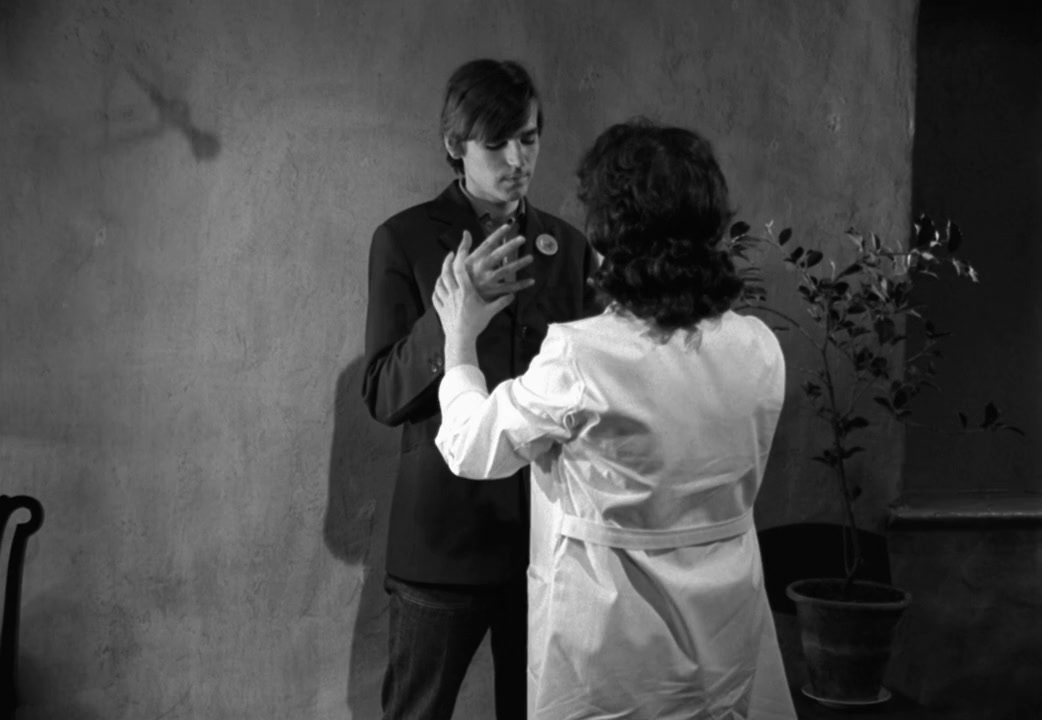
Visually, the film is rife with haunting, surreal imagery. In a black-and-white dream, Aleksei's mother stands in a large, empty room, shaking water off of her arms and the hair covering her face, before the room dissolves around her in a dampened cascade of rain and wet plaster. In another, the same woman levitates several feet above a bed until a white bird flies over her. In one of the film's more well- known scenes, the family's barn burns as Aleksei's family and neighbors watch, their small figures helplessly standing at a distance as the structure simply burns.

Watching The Mirror is artistic bliss. The depth of many of Tarkovsky's shots is enrapturing; the texture of the world around the characters is palpable. You feel the cold, hard wood of the floors and walls of Aleksei's childhood home and the cold of a Russian winter. The film reaches a certain part of your mind and supplants a man's consciousness into your own, leaving you in something of a trance.

I can never fully explain this movie, and in that knowledge comes some of my enjoyment and appreciation of it. Each idea and realization I make about particular aspects of the film is nothing compared to the work as a whole. The Mirror is ultimately a film that is meant to be experienced rather than to be fully understood or explained. The human mind is itself nebulous, and how appropriate it is that a film meant to visually portray one should be as such.

Read more IMDb reviews

9 Comments

Be the first to leave a comment