Sodom and Gomorrah

1922 [GERMAN]

Action / Drama
2
IMDb Rating 5.9/10 10 263 263

Director

Top cast

Walter Slezak as Eduard Harber - Student am Cambridge-Lyzeum / Ein Goldschmied von Galiläa
Willi Forst as Extra
Béla Balázs as Extra
720p.BLU 1080p.BLU
1.39 GB
1280*682
English 2.0
NR
23.976 fps
2 hr 34 min
Seeds ...
2.57 GB
1920*1024
English 2.0
NR
23.976 fps
2 hr 34 min
Seeds 2

Movie Reviews

Reviewed by HelenE-3

The wages of sin is tedium

I saw this at the London Film Festival in 1995 or 1996. The print had been lovingly restored from sections scattered around the world, including some from archives in Moscow. Somebody near me said "I'm really looking forward to this", which was understandable, since the director, as Michael Curtiz, later made some jolly swashbucklers and Casablanca, and the LFF had previously come up with several almost unknown silent masterpieces, including Jacques Feyder's Visage d'enfants.Well, the pianist was superb and the voice-over translator (no time to translate the German titles) produced some splendid characterization. But about ten minutes in, people realised that the film was incredibly bad, and they didn't even know when it would be over as it hadn't been projected complete before. Watching it felt like existentialist hell. Which was fair enough as it's meant to be a study of sin and remorse. A young man is tempted by sex, drugs and stuff, but he falls asleep and dreams of the biblical story of the destruction of the cities of the plain, which are a bit like Vienna and populated by his low-life pals. When he wakes up, he repents. I think the sin stuff is meant to be alluring and you're meant to think that the director has been clever framing it in a moral tale. Instead, you get the idea that sin is a lot less interesting than, maybe, a novel by Jane Austen.It's really a very substandard knockoff of Intolerance, possibly of interest to design specialists.
Reviewed by

Reviewed by Dominic_25_ 4 / 10

Michael Curtiz demonstrates impressive filmmaking capabilities in this biblical epic.

The print I saw was not the 150 minute film listed, it wasn't the original 3 hour version, and it was not the restored 98 minute version mentioned on the wiki. I watched a 124 minute Spanish translation. My Spanish is very bad so I had to rely on that and google translate to understand the intertitles. Between the language and differing lengths of prints I don't feel like I got a viewing that Curtiz would call appropriate but I think I can attempt to interpret this story of his.

This is only the second film I have seen from Mihály Kertész (the other being Labyrinth des Grauens from the previous year), later known as Michael Curtiz. This one is just a spectacle, and its legacy as the most expensive Austrian silent film is testament to that.

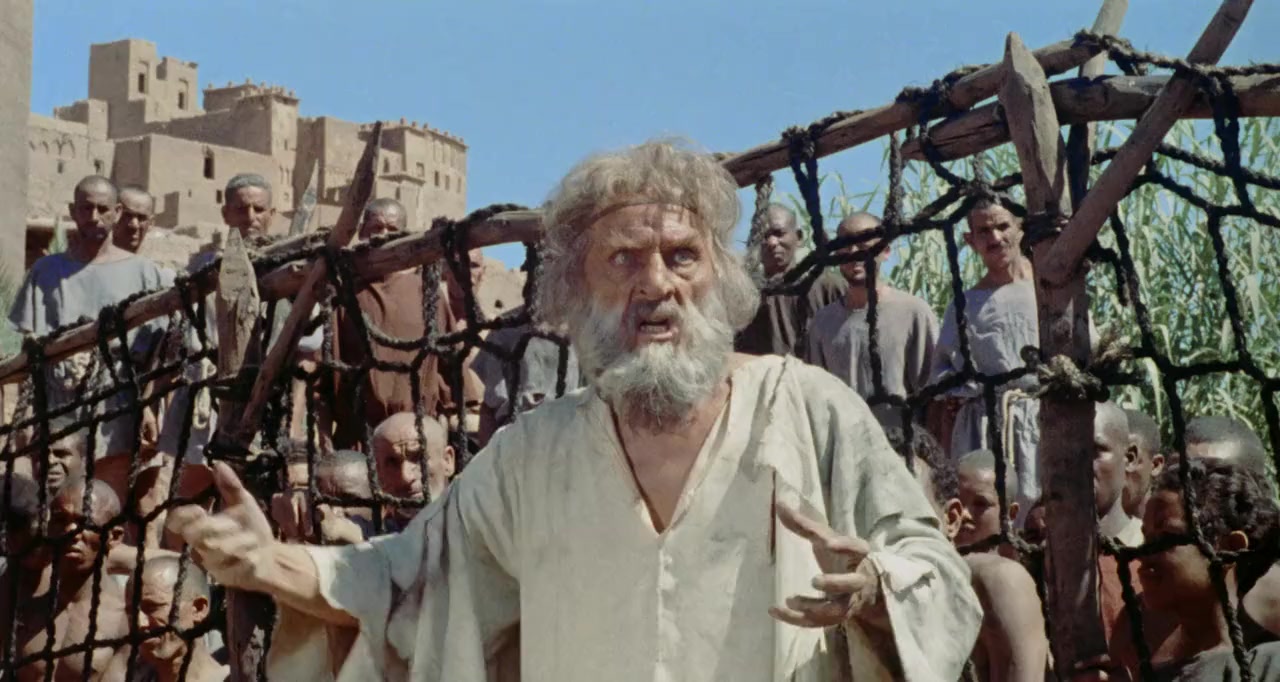
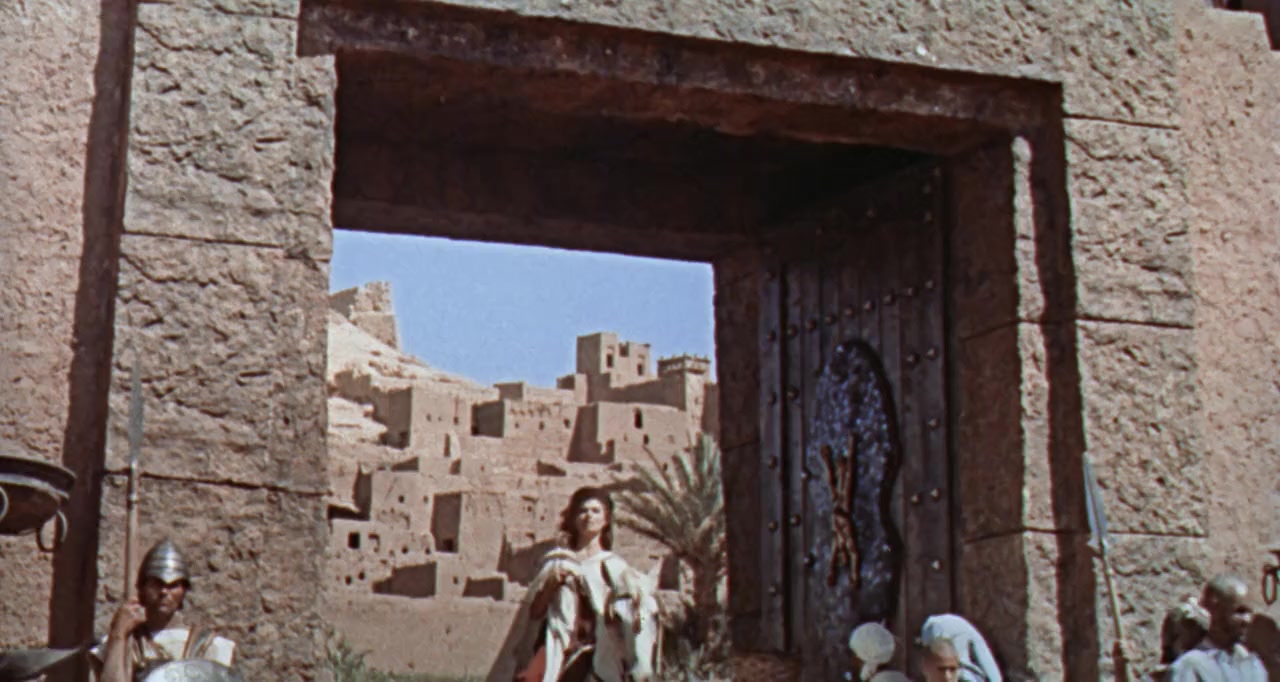
You can tell when watching this that Michael Curtiz understands the concept of visual storytelling, whereas with his previous work he relied very heavily on intertitles. His shot framing, lighting, mise-en-scène, set design, and scale of production are all on display in this one. Especially impressive is the thousands of extras and massive sets on display in the historical sequences, very clearly inspired by the pre-war Italian epics (and probably DW Griffith's Intolerance). I can see with this one why years later Curtiz claimed that Vienna was the most advanced film culture of this era. I don't agree but this definitely makes a strong argument.

The story really isn't too interesting, following the lead of Curtiz's previous outing. It again features flashbacks and dreams, only this time the majority of the film is dream sequences. A woman influenced by immoral vices learns morality through a premonition and a comparison to Biblical stories. I'm not a fan of Biblical morality and that is probably one reason why I found the story boring.

This film has obvious comparisons to the American epics of the time as well as the Italian epics from the previous decades. I don't think the Italian efforts are nearly as interesting cinematically as Curtiz's extravaganza, as the only reason they're relevant is because of their scale and their popularity in Europe at the time. I think this film has a better story and messaging than Intolerance (1916), which is a low bar. It's close between this one and The Ten Commandments (1923) over which is more bearable. Cecil B DeMille's is much more dogmatic in its messaging but his special effects are good and I did enjoy his historical sequence more.

Overall this film is notable as a stepping stone in the memorable career of Michael Curtis and for being a landmark in Austrian cinema. Not sure I'm going to revisit this one again but it wasn't bad considering it is a 2+ hour silent film.

Read more IMDb reviews

7 Comments

Be the first to leave a comment