Stranger on the Third Floor

1940

Action / Crime / Drama / Film-Noir / Music / Mystery / Romance / Thriller

6
Rotten Tomatoes Critics - Certified Fresh 74% · 27 reviews
Rotten Tomatoes Audience - Upright 63% · 500 ratings
IMDb Rating 6.8/10 10 5004 5K

Director

Top cast

Jack Cheatham as Detective
Cliff Clark as Martin
Harry C. Bradley as Court Clerk
Herb Vigran as Reporter Who Wins Cardgame
720p.WEB 1080p.WEB
583.95 MB
958*720
English 2.0
NR
23.976 fps
1 hr 3 min
Seeds 4
1.06 GB
1438*1080
English 2.0
NR
23.976 fps
1 hr 3 min
Seeds 5

Movie Reviews

Reviewed by metaphor-2

A B-Movie that transcends its lowly production status

This is a classic B (not a quality-judgment, but a well-defined production level that existed before the legal consent-decree that ended studio ownership of movie theaters in the early 1950's. B-movies were lower-budget features, between 55 and 70 minutes, using second tier talent - rising actors or ex-stars on their way down - designed to play the bottom half of a double-feature with an A-picture. The studios needed to produce a certain number of these pictures to keep their theaters supplied, and the quality was only of second importance.) Very often, the low budget gave the filmmakers a certain freedom, because the studio wouldn't keep very tight control on a production of such relative unimportance. B- movies sometimes served as the canvases for highly innovative directors and photographers. (Note that the talent behind the camera includes both the (uncredited) work on the script by no less than Nathaniel West, author of DAY OF THE LOCUST, and cinematography by Nicholas Musuraca, who went on to shoot such atmospheric classics as CAT PEOPLE, CURSE OF THE CAT PEOPLE, OUT OF THE PAST, and the vastly under-appreciated psychological thriller THE LOCKET.)The late William K. Everson, a fanatical private film collector and one of the greatest film historians, used to show this picture in his B-movie class at NYU as an example of "Films made on one set." The one set in this case is the street scene, although the staircase of the apartment building is also prominently featured. The street was, of course, a standing set that appeared in many films. But if you watch the film carefully, you'll realize that many of the other settings are hardly more than lighting effects on a bare sound-stage. The so- called "surrealism" of the film is a triumph of turning low-budget necessity into an effective style.As to the claim that it's the first film noir, that's pretty questionable. Film noir really was born in France in the late 30's (there's a reason why the term is French). "Le Jour Se Leve" is probably the best-known example. It was characterized by the dark settings as well as the dark pessimism of its mood, using shadows to separate people, and to fragment the image of the individual. This is certainly an early American film noir, once again because of the spareness of budget forced the use of shadows to hide the lack sets. This is a very enjoyable, effective thriller, taking us from a rather mundane, plausible reality into a wild nightmare. Lorre's brief appearances become the engine of the fears, that frightening presence you expect to find in every shadow.
Reviewed by utgard14 7 / 10

"What difference does it make? There's too many people in the world anyway."

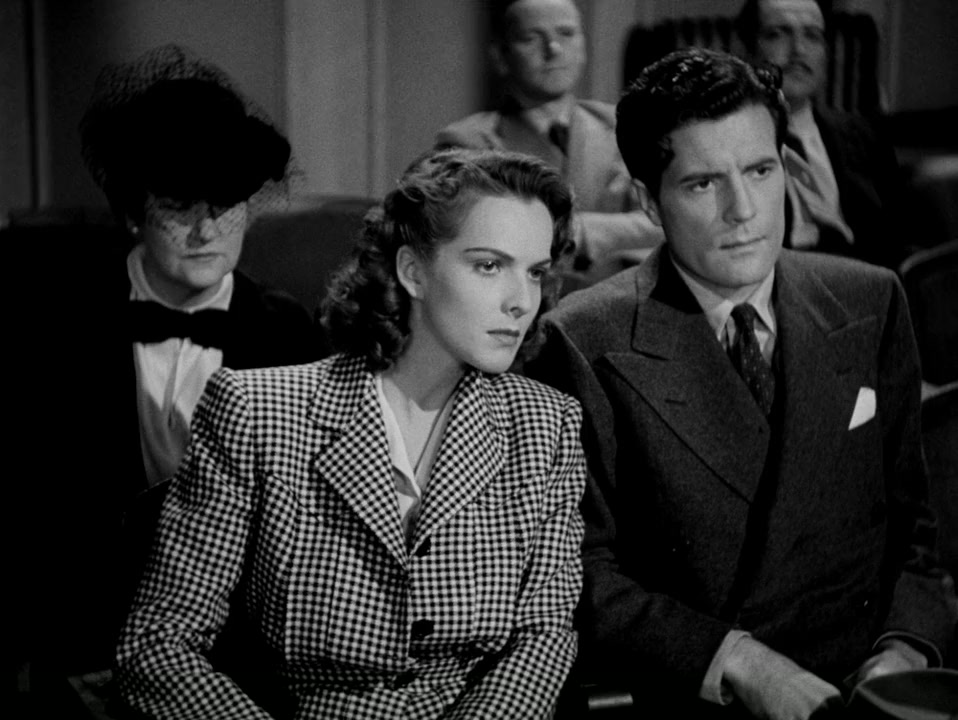
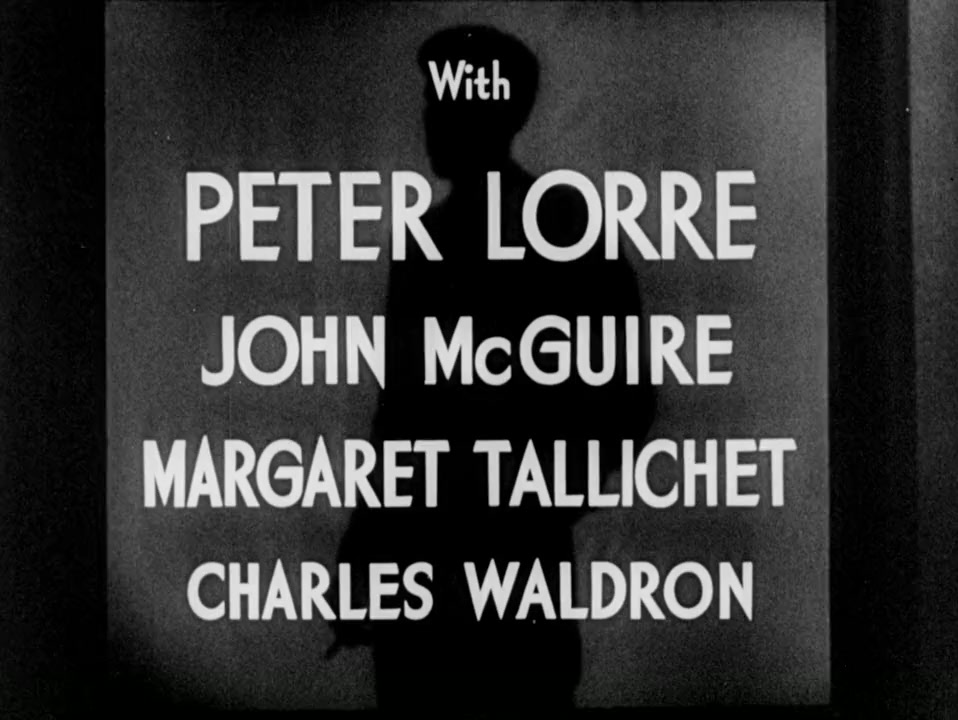
Reporter Michael Ward (John McGuire) gives testimony at trial that helps convict an innocent man of murder. Now Ward finds himself in a similar situation, accused of a murder he didn't commit. His girlfriend Jane (Margaret Tallichet) sets out to find a creepy stranger (Peter Lorre) seen lurking about on the night of the murder.Despite being top-billed, Peter Lorre is not in this much. But when he is in it, he's really creepy and weird in that Lorre way we all love. Also, I loved Elijah Cook as the poor sap wrongly convicted at the start of the movie. Often cited as the first film noir, this is a very cool murder mystery that effectively uses flashbacks and dream sequences. It has a lot of style for a B movie that barely runs an hour. Just goes to show you don't need 2 1/2 hours to make a good movie, something today's filmmakers should learn.
Reviewed by

Read more IMDb reviews

3 Comments

Be the first to leave a comment