The National Health

1973

Comedy

Plot summary

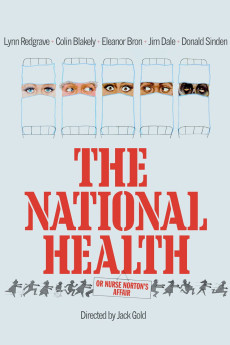
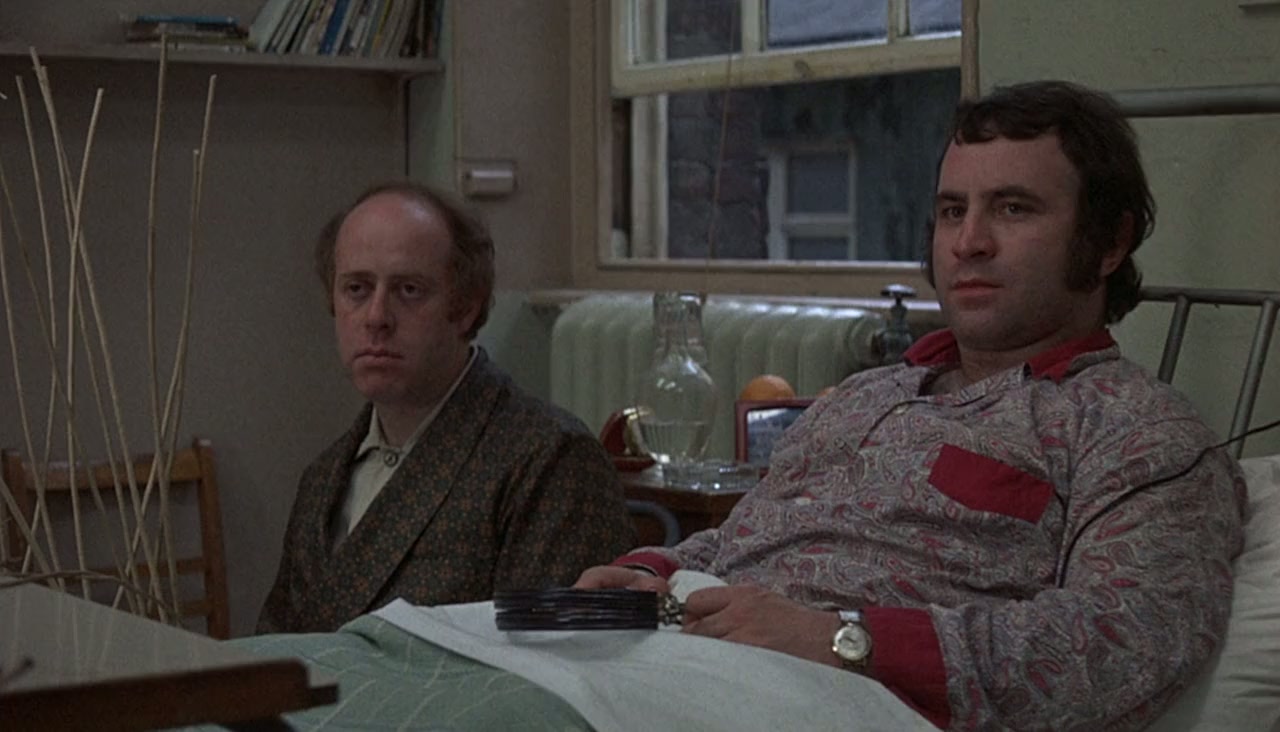
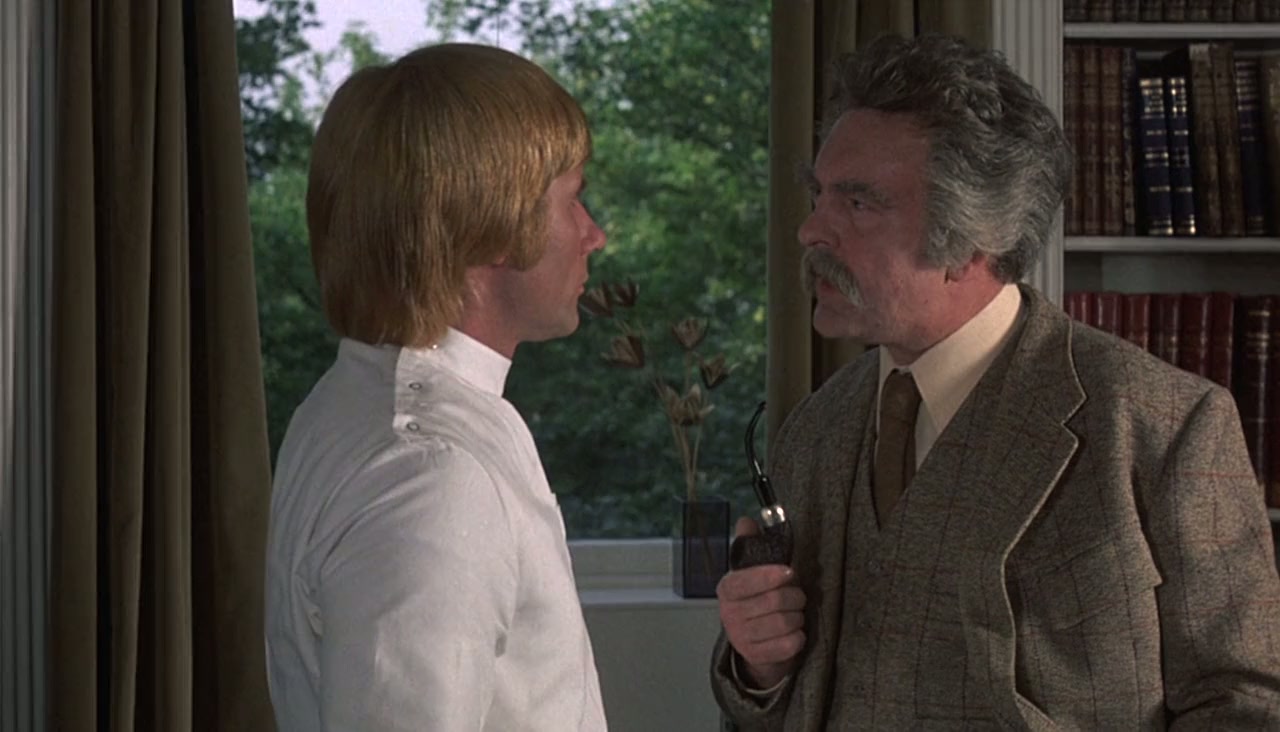
Peter Nichols adapted his own hit play to the screen, based on his experiences in hospitals. A riotous black comedy that's as timely today as ever, it contrasts the appalling conditions in a overcrowded London hospital with a soap opera playing on the televisions there. In an ingenious touch, the same actors appear in the "real" story as well as the "TV" one, thus blurring the distinctions even further. Jack Gould directs such outstanding British actors as Lynn Redgrave, Colin Blakely, Eleanor Bron, Jim Dale, Donald Sinden, Mervyn Johns, and, in only his second film, Bob Hoskins. The renowned Carl Davis composed the score.

Director

Top cast

Gillian Barge as Dr. Bird
Jim Dale as Barnet
Colin Blakely as Edward Loach
Clive Swift as Ash
720p.BluRay 1080p.BluRay
897.02 MB
1280*732
English 2.0
NR
Subtitles us  
23.976 fps
1 hr 37 min
Seeds 5
1.63 GB
1888*1080
English 2.0
NR
Subtitles us  
23.976 fps
1 hr 37 min
Seeds 4

Movie Reviews

Reviewed by 5 / 10

'There should be clinics where one could get one's death like a library book' - interesting, flawed 'film'

"The National Health" falls into the trap of so many British films: that of staying faithful to its previous incarnation in another medium. This is a stage-play only nominally opened up, made cinematic. I suppose this makes a marginally refreshing change from 1970s British cinema's more common ploy of barely adapting television sitcoms to the big-screen. Marginally.It attempts allegory through the use of irony; counter-posing scenes of idealised US television depictions of hospital life with the 'reality' of NHS life in grimmer 1970s Britain. The film certainly captures some of the loss of faith in the Welfare State that was occurring, and eventually led to the rise of Margaret Thatcher and the 'New Right', who looked to reform state services. It should be noted, however, that the NHS was not privatised by Thatcher, and remains, broadly speaking, a public health provider with care free at the point of use (despite the experience of greater marketisation that staff have had, behind the scenes).It seems curious that this 1973 film barely expresses any faith in public health provision, considering that in 2010 the NHS remains a loved British institution. Nichols clearly saw himself as 'saying the unsay-able' at a time when social democratic politics seemed thoroughly embedded in almost all aspects of British life. The script gestures towards this with one hospital ward named after Sir Stafford Cripps, one of the Labour politicians responsible for the post-WW2 welfare settlement. Nichols sets out to critique socialism, basically saying that socialism had not truly arrived in Britain, with lazy staff and bickering patients. The system is seen as part of the usual British 'muddling along', rather than fulfilling the humanist efficiency foreseen by NHS founder, Aneurin Bevan.There are jibes at the coarsening of British life: 'We want to rise, not sink in the bog', Clive Swift lamenting the reduction of English, 'the most beautiful language in the world' into 'a string of obscenities' by 'most people' you meet. There is the sense of a Britain having lost its old certainties; the 'simple dignity' and stoicism of WW2, with people now expecting a lot more from life and the reality often falling short. This is stated - with sledgehammer subtlety - through the idealised US hospital scenes. Perhaps making the point that media images and advertising have given people false idols to worship; antiseptic product and the unobtainable romance of Mills and Boon.Hollywood did hospital satire rather better two years previously with "The Hospital", a coruscating drama that captures the conflicted nature of public service in modern consumer society rather more bitingly. That film is often just as verbose, but has a magnetic central performance from George C. Scott to anchor the whole thing. This has a fine ensemble, but a lack of dramatic tension or direction. It tends to meander, with its scatter-shot potshots at the mores of Blighty.The acting is, naturally, faultless; from the fine character actor Clive Swift, to a well-cast Jim Dale - making a conscious link to the "Carry Ons" - to Bob Hoskins (playing the socialist Foster, the one character unreservedly defending 1970s Britain) and to Colin Blakely as the laconic, archetypal gloomy Loach. Oh, and the presence of the striking, mellifluous Eleanor Bron is recommendation enough for any film.This film clearly has a lot to say about the state of the nation, but, in contrast to that other 1973 film "O Lucky Man!" it does not work as cinema and ironically comes across as much more long-winded than Anderson's flawed masterpiece, despite being about half its length.
Reviewed by 5 / 10

Doctor, You've Got to Be Kidding!

Reviewed by 6 / 10

The National Health

I think this must have worked better on stage, for once it hits the big screen it really only comes across as a slightly more earnest, lightly politically charged, "Carry On" or "Doctor at...", concept with shades of the "Likely Lads" added for good measure. Hospitals always did provide very fertile territory for a sitcom, and here the pithy dialogue goes some way to raising a laugh. The characterisations are, however, all a bit two-dimensional - though that does work rather better when we are watching their own television parody of American medical soaps starring the same actors with some truly dreadful accents. In some ways that attempt at allegory does work. The well funded and slick operation (no pun intended) of the fictional US scenario contrasts quite starkly with it's "real" UK equivalent, set in a run down London hospital where recycling was popular by necessity rather than environmental friendliness. The NHS is one of those things we Brits call a "National Treasure", but this film seems content to downplay it's achievements and it's significance as one of the world's oldest and biggest healthcare services that is free at the point of access. I didn't really love the acting, if I'm honest. Clive Swift's quirky and observant "Ash" maybe stole the show, but otherwise it has a distinct ring of the " Carry On" cast-off about it with Donald Sinden and Jim Dale hamming it up annoyingly. Perhaps I just wasn't in the mood, or maybe it was just of it's time when a nation still laughed at "Steptoe" and "Alf Garnett", but it's a film that is rarely screened nowadays, and it's not hard to understand why.
Read more IMDb reviews

No comments yet

Be the first to leave a comment