The River

1951

Action / Drama / Romance

16
Rotten Tomatoes Critics - Certified Fresh 92% · 25 reviews
Rotten Tomatoes Audience - Upright 79% · 1K ratings
IMDb Rating 7.4/10 10 7342 7.3K

Director

Top cast

Adrienne Corri as Valerie
Esmond Knight as The Father
Bhogwan Singh as Sajjan
Jane Harris as Muffie
720p.BLU 1080p.BLU
914.09 MB
968*720
English 2.0
NR
23.976 fps
1 hr 39 min
Seeds 1
1.66 GB
1440*1072
English 2.0
NR
23.976 fps
1 hr 39 min
Seeds 17

Movie Reviews

Reviewed by CinemaSerf 7 / 10

The River

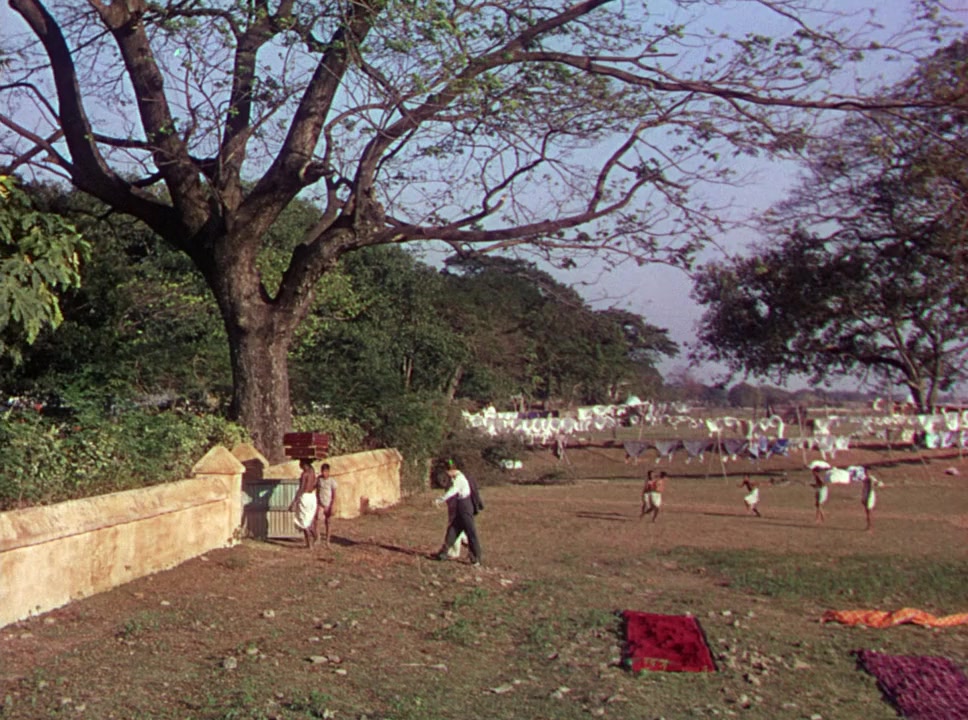
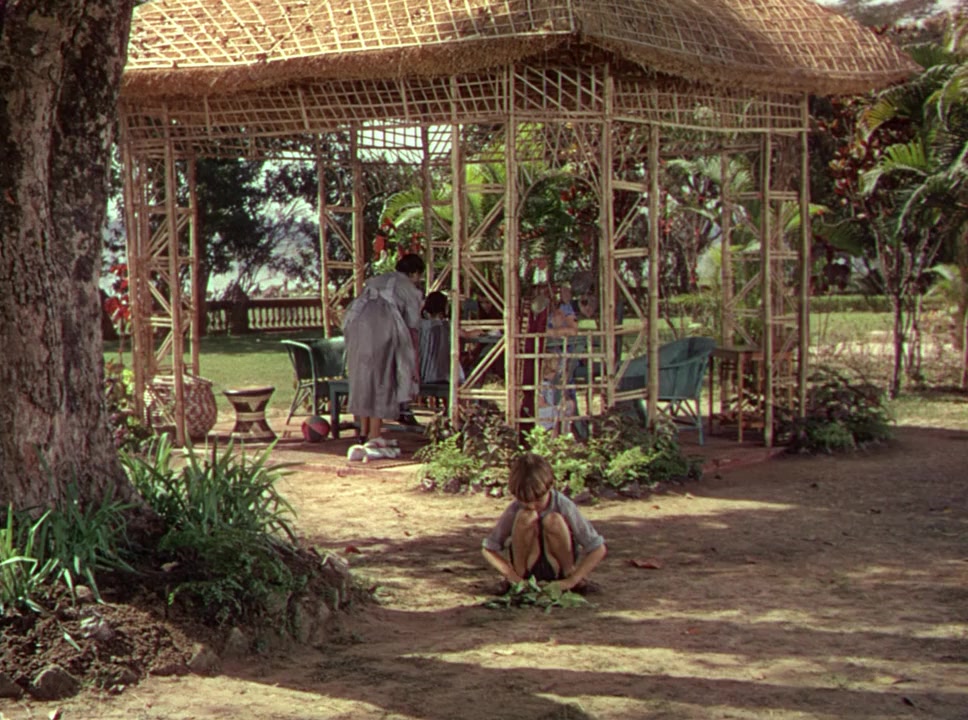
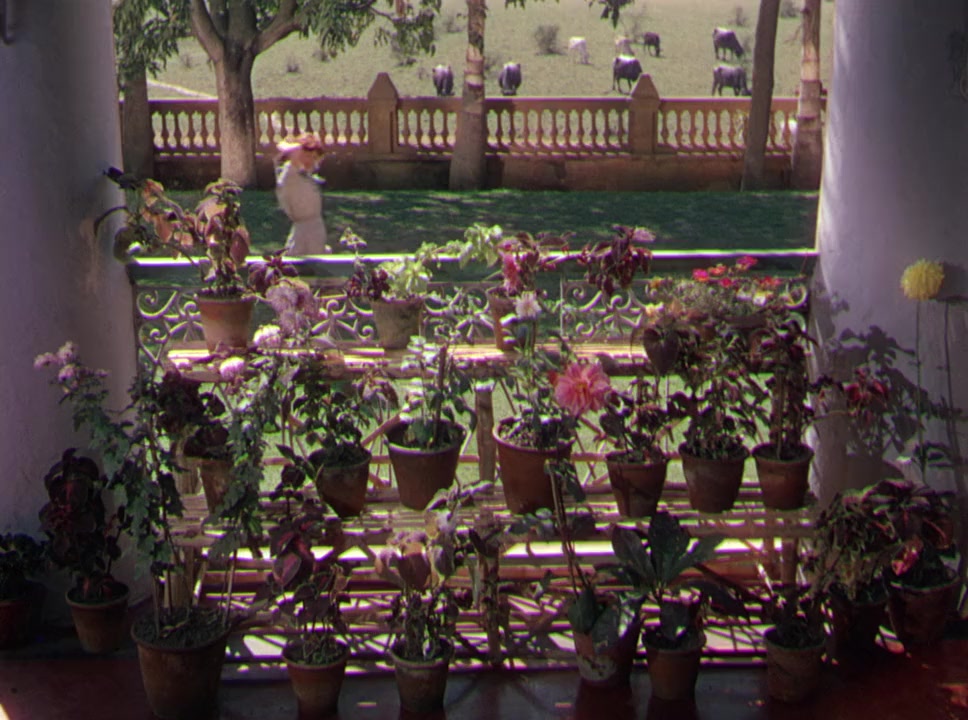
I found there to be something of the beauty of one of novelist Rumor Godden's other novels - "Black Narcussus" (1947) in this gorgeously photographed tale of three young women growing up with the Ganges river providing a constant in their lives. Our story is narrated, in part, by "Harriet" (Patricia Walters) who lives an affluent life beside the river with her much younger sisters, brother and with her mother (Nora Swinburne) expecting number seven! The age difference means she spends much of her time with her two friends "Valerie" (Andrienne Corri) and "Melanie" (Radha). "Melanie" is of mixed-race, her father being being British, her late mother a local - and so their's is a more complex dynamic fitting in with a society that was still pretty unforgiving of inter-racial transgressions. The three girls rub along well enough though, enjoying the simplicities of their privileged lives, until the arrival of the handsome "Uncle John" (Thomas E. Breen) who is the cousin of "Mr. John" (Arthur Shields) - the dad of "Melanie". This visitor has, quite literally, been through the wars and has a prosthetic limb to show for it. Psychologically struggling, he has come to hide himself away; to remove any reminders of his former more able existence. What he doesn't bargain for though are these three girls. They take an immediate shine to him and over the course of the latter part of the film we enjoy their growing infatuation and rivalries - all set amidst the colourful and vibrant Hindu community in which they live but with which they have remarkably little but the most polite of involvement. As you'd expect, the narrative delivers an occasional tragedy and it takes a perhaps little too stoic a view on the value of human life - especially when it isn't white - but for the most part the story seems set on avoiding anything politically, or even societally contentious as the plot develops. Essentially, there's not a great deal of actual substance to this story. It's a beautifully photographed and aesthetically pleasing depiction of a dream, if you like - and it's not a great dream for everyone; even "Harriet" - before the timeless Ganges continues on it's way past farms, fields, temples and homes. It looks great on a big screen and if you can, literally, go with the flow then you ought to be able to appreciate it for what it was, when it was written in 1946.
Reviewed by

Reviewed by lasttimeisaw 7 / 10

a smugly colonial tip of the Indian iceberg

Jean Renoir embraces Technicolor for the first time in his adaptation of Rumer Godden's coming- of-age novel THE RIVER, with the latter collaborating on the screenplay. The story takes place in Bengal, India, a teenage girl named Harriet (Walters) is the eldest child of a middle-class British family living near the riverbank of Ganges, her father (an one-eyed Knight) runs a jute mill, and her mother (Swinburne) is expecting a child no. 7.

It is a carefree scenario, growing up in the natural inculcation of an exotically profound Hindu culture while carrying on an genteel upbringing, sometimes, it conspires to be a false or at least parochial impression of the land and its people, which doesn't take up too much space in the story-line, the only native Indian who has a speaking part is Nan (Mukerjee), the family's convivial but gossipy nanny, and the rest sustains as an ethnic curiosity to meet the Westerners' eyes, although beguilingly and entrancingly so, after all, what we are allowed to watch is the smugly colonial tip of the Indian iceberg.

The plot revolves around Harriet's budding affection towards the guest of their neighbor Mr. John (Shields), an one-legged American Captain John (Breen), who takes his time in lolling on a foreign land, to find some peace with his battlefield past and physical disability, look for a new resolution for life. As John is the only eligible white young man on the market, to her chagrin, a besotted, but fairly plain-looking Harriet has a losing game against her rival, the maturer and more zaftig Valerie (Corri), by the way, a British girl too is also her best friend. And throughout this picturesque film, it is Harriet's voice-over that guides viewers traversing her prepubescent triviality (poems, indeed), to listen to her inner voice, to sympathize her unrequited love, to find empathy in this garden-variety tale.

Wielded as an emotional clincher, a tragic incident materializes as one downside of having a brood of many caused by adult negligence, but here also emanates a disquieting undertow to pinpoint the virulence of a foreign society with a local boy standing by as an unwary abetter. And a cheesy solution to get it over is taking the pro-procreation flag, babies are being borne all the time.

The cast is mixed with adult professionals and amateur players, but comes off barely adequate, a major gripe is the narrative ellipsis in the story of Melanie (Radha), the mixed-race daughter of Mr. John, who stands out (there is not much competition though) with a massively pleasurable Ganesha-courting dancing sequence, but whose dislike of herself, waffling identity never been considerably mapped out as a pre-eminent counterpoint of Harriet's more orthodox background.

So, all above sounds like a pejorative critique against a film who has earned a hallowed reputation since its genesis, yet, it is as plain as the nose on one's face, the picture's eye-catching glamour and aural accompaniments are undeniably supreme, technologically speaking. And it is smart enough for Mr. Renoir to treat it as a philosophical prose other than a heady narration of banal proceedings, only a 60-odd-year later, its allure fades away slightly due to the original novel's awkward stance on a colonized land and Renoir's condoning deference.

Read more IMDb reviews

7 Comments

Be the first to leave a comment