To Be or Not to Be

1942

Action / Comedy / Romance / War
42
Rotten Tomatoes Critics - Certified Fresh 96% · 54 reviews
Rotten Tomatoes Audience - Upright 93% · 5K ratings
IMDb Rating 8.1/10 10 49452 49.5K

Director

Top cast

John Roy as Member of Audience at Performance of Hamlet
Jack Benny as Joseph Tura
Hans Schumm as Special Investigations Squad
Maude Eburne as Anna
720p.BLU 1080p.BLU
808.66 MB
1280*932
English 2.0
NR
23.976 fps
1 hr 39 min
Seeds 3
1.55 GB
1472*1072
English 2.0
NR
23.976 fps
1 hr 39 min
Seeds 60

Movie Reviews

Reviewed by AlsExGal 8 / 10

A smart intimate comedy

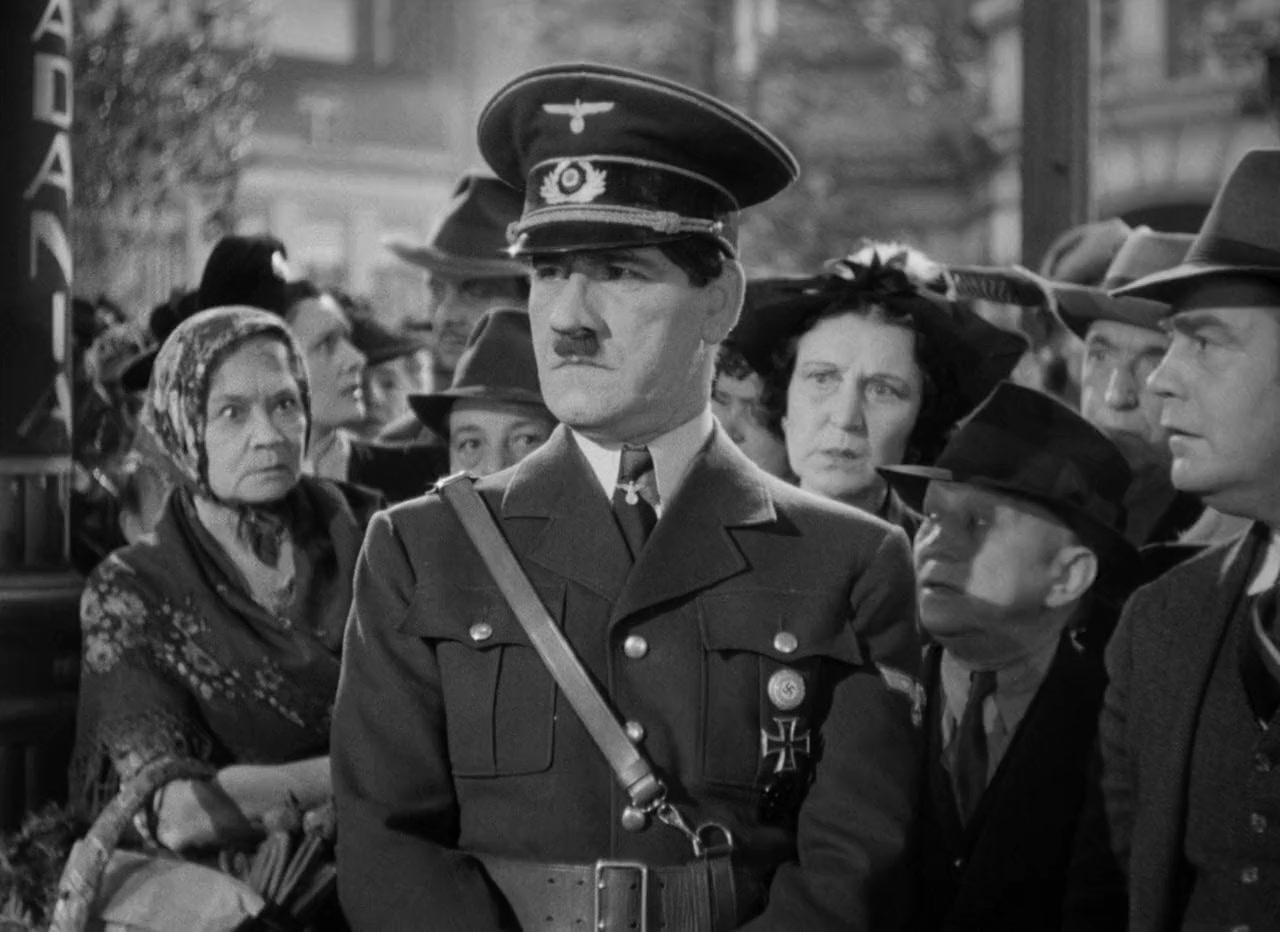
The opening scene in Ernst Lubitsch's "To Be or Not to Be" is one of the great fakeouts in cinema. It starts with Hitler randomly showing up in Poland despite the two countries still being at peace. As it turns out, what we're actually watching is an actor dressed as Hitler doing a bit of publicity for his theatrical troupe's production of a satire of the Nazis.Maria Tura and Joseph Tura (Carole Lombard and Jack Benny) are a married couple in the same theater troupe. Stanislav Sobinski, a young Lieutenant (Robert Stack) in the Polish air force, is an ardent admirer of Maria's. They have arranged to meet whenever Joseph Tura launches into his "To Be or Not to Be" soliloquy. Yes, Joseph notices this, but not for the right reason. He's so egotistical about his acting that he resents the fact that Sobinski doesn't find his performance too enthralling to walk out of. He suspects nothing else.The Germans attack and quickly conquer Poland, with Sobinski going to England to offer his services as a pilot there and Maria and her husband become unwillingly entangled with the Nazis. To get out of the situation alive, they'll both have to use their acting skills to put on the performance of a lifetime. This situation happens after the young Lieutenant unwittingly hands over Maria's name to a professor friend of his, Siletsky (Stanley Ridges), who turns out to be a German spy.Lubitsch casting Carole Lombard opposite Jack Benny was pretty bold. For one thing, Jack Benny was not known for having much success at the box office versus his great timing on radio and later on TV.Most of Lubitsch's films take place in Lubitschland, but this film decidedly takes place in 1939 Poland. Some have called this a cross between The Marx Bros. And Mel Brooks, and in fact Mel Brooks remade this film in 1983.
Reviewed by

Reviewed by howard.schumann 9 / 10

Skewers the Nazi cause as effectively as Casablanca

In celebrating the 75th anniversary of the release of Casablanca, it is easy to overlook another anti-Nazi film, Ernst Lubitsch's "screwball" comedy To Be or Not To Be, a film that skewered the Nazi cause with equal effectiveness. While not as dramatic or filled with memorable lines and patriotic songs, To Be or Not To Be, like Casablanca, the film features two main Hollywood stars, Carole Lombard and Jack Benny and a love triangle in which romance must be subordinate to a greater cause. Set in Poland just before the German invasion of September 1, 1939, the film opens as a mustachioed man bearing a close resemblance to German Chancellor Adolf Hitler is seen walking alone in the streets of Warsaw.

This Hitler, however, turns out to be the actor Bronski (Tom Dugan), a bit-player impersonating the Fuhrer in a play being put on by a Polish theatrical group. Is Hitler "by any chance interested in Mr. Maslowski's delicatessen?" teases the narrator in the opening segment. "That's impossible—he's a vegetarian!" Responding to all the "Heil Hitler" salutes, Bronski asserts "Heil myself" as he walks through an open door. Bronski is playing a secondary role to the famous Polish actor Josef Tura, played by Jack Benny, then a radio star whose trademark straight face and deadpan humor marks the film.

Tura's wife Maria, also a popular Polish actress, is played by Carole Lombard who was to meet a shocking death in a plane crash in January, 1942 shortly after the film was completed. In the film, Maria is two-timing her actor husband by romancing a young flyer Lt. Sobinski (Robert Stack) who falls "head over heels" for the actress. The running gag in the film is that whenever Josef is playing Hamlet and delivers the line, "to be or not to be," it is a signal for Sobinski to get up from his seat in the theater and go backstage to meet Maria in her dressing room. It appears that Tura is more upset about his speech being interrupted than what happens behind the curtain.

The sudden Nazi invasion, however, puts all romantic trysts on the back burner and the mood shifts to solemn. The plot now becomes more involved with espionage and patriotism than acting when Sobinski, now a pilot for the Royal Air Force, discovers that respected Polish professor Siletski (Stanley Ridges) is a double-agent working for the Nazis. When the Lieutenant returns to Warsaw to eliminate the traitorous professor, Maria and Josef team up to help by launching an elaborate charade to trick the unsuspecting Nazis. While the film takes its name from the famous line in Hamlet, Shylock's monologue from the Merchant of Venice, spoken in front of Nazi swastikas, is recited by Jewish actor Felix Bressart, "Have we not eyes? Have we not hands, organs, senses, dimensions, attachments, passions?" he asks the Nazis, "If you poison us, do we not die?"

It is a noteworthy plea for tolerance in the days of rabid anti-Semitism even though the line "Hath not a Jew eyes?" is not spoken. According to Thomas Doherty writing in Tablet magazine, "the word "Jew" was seldom heard on the Hollywood screen, even in war-minded scenarios where the topic of anti-Semitism was front and center." He also quotes film historian Lester D. Friedman saying that "The studio bosses were always—even at this point—afraid of thrusting Jews into the spotlight." Whatever the reason, To Be or Not to Be is marked with the genius of one man, the great Jewish director Ernst Lubitsch who said, "What I have satirized in this picture are the Nazis and their ridiculous ideology," and that the tone and temper of the film "cannot leave any doubt in the spectator's mind what my point of view and attitude are toward these acts of horror."

While the film is a broad and biting satire, from the beginning of production in November 1941 to its completion on December 24th, however, events made sure that To Be or Not to Be, as well as Charles Chaplin's The Great Dictator, was no longer a laughing matter.

Read more IMDb reviews

5 Comments

Be the first to leave a comment