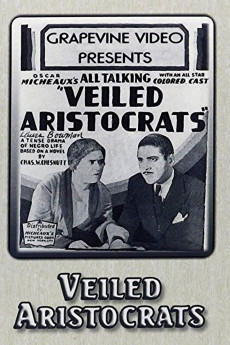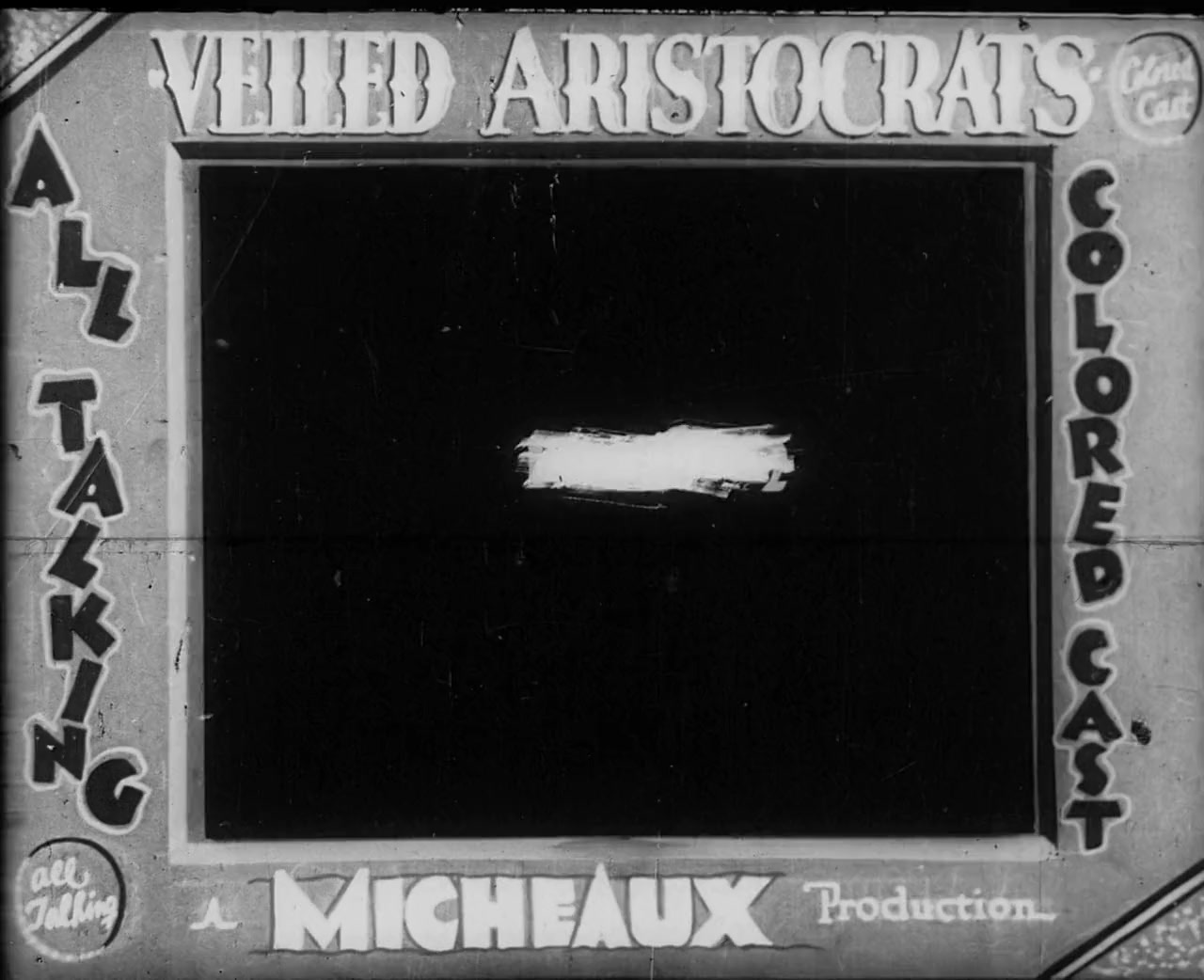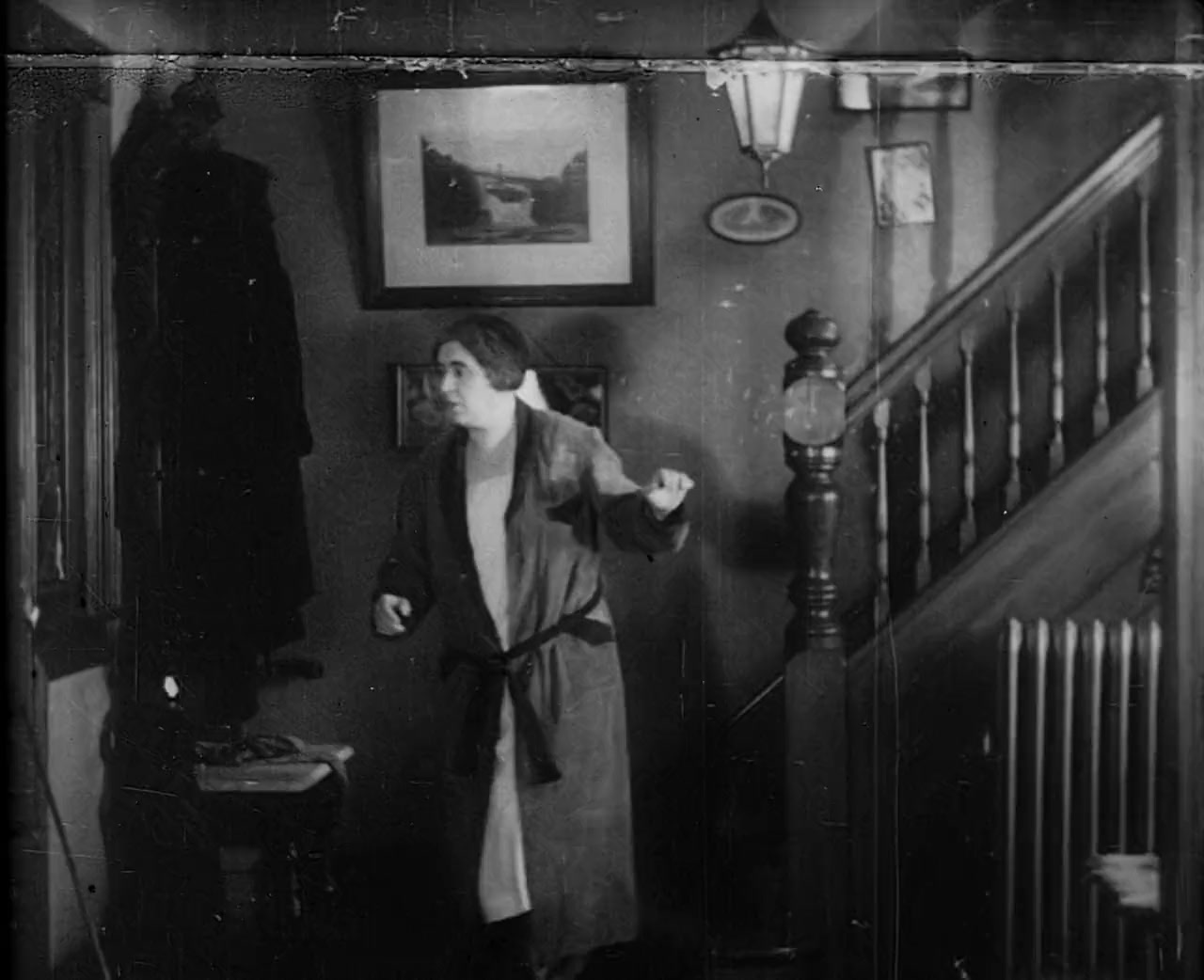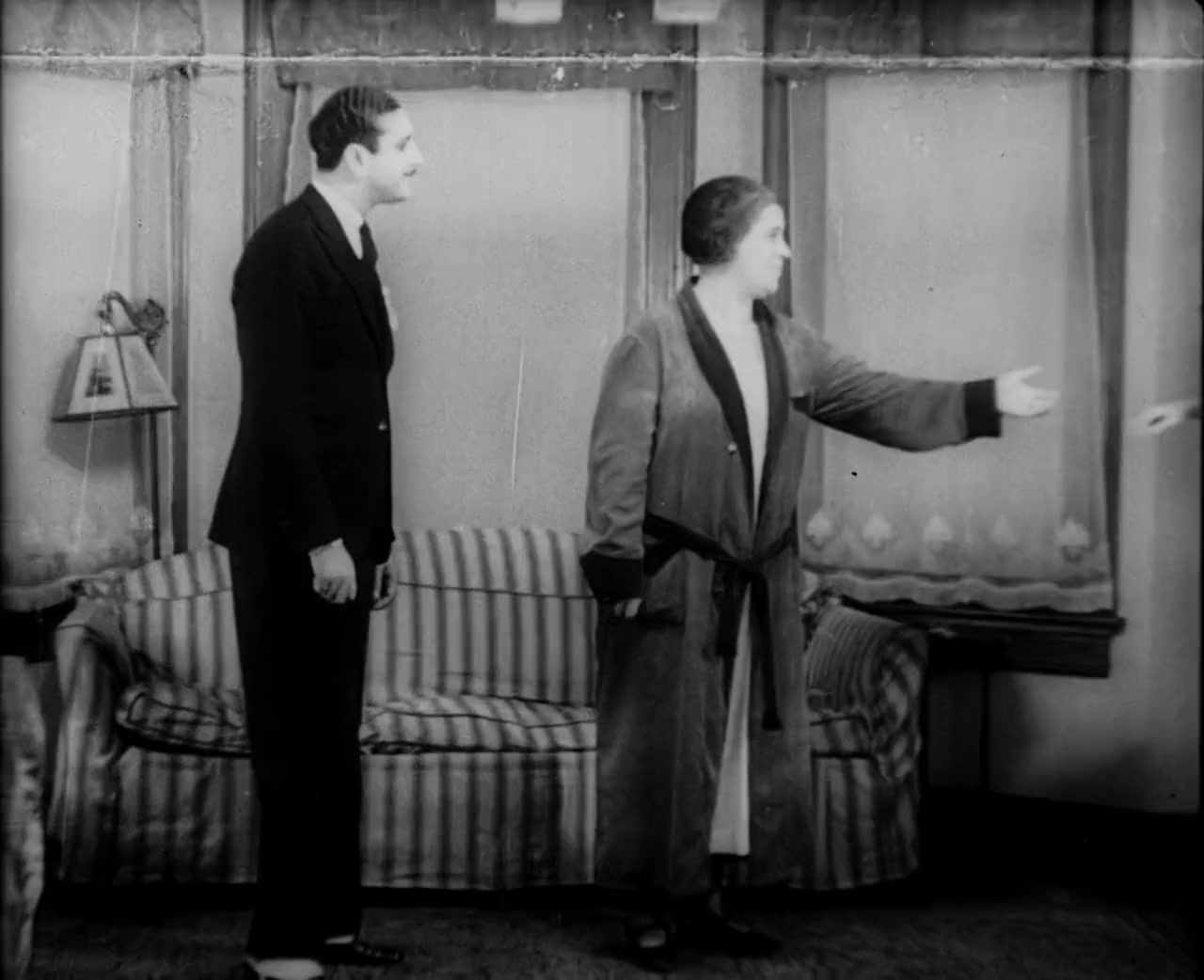
Veiled Aristocrats

1932

Drama

2
Rotten Tomatoes Audience - Upright 80%
IMDb Rating 4.9/10 10 193 193

Director

Top cast

Lorenzo Tucker as John Warwick
Barrington Guy as George Tryon
720p.BLU 1080p.BLU
405.27 MB
1280*1042
English 2.0
NR
us  
23.976 fps
12 hr 44 min
Seeds 17
752.84 MB
1326*1080
English 2.0
NR
us  
23.976 fps
12 hr 44 min
Seeds 42

Movie Reviews

Reviewed by 6 / 10

An ok film with an interesting theme

Reviewed by 6 / 10

Great message, poor execution, and unfortunately chopped up

Offering criticism for this 91-year-old film is like shooting fish in a barrel - the dialogue is stilted, the acting is terrible, and the static camera conveys no life. On top of it, the quality of the print which survives is poor, entire scenes or bits within scenes are missing due to damage or local censorship, and the result is a bare bones story with abrupt transitions and frequent audio skips. It's the polar opposite of 'polished,' and is frustrating at times to watch, even at just 44 minutes.On the other hand, the film touches on important subjects, that of 'passing' as a black person in white society, and class differences within the community that end up being based on how light or dark-skinned someone is.Oscar Micheaux was conservative in some ways, and indeed we see here one character saying they must all strive to achieve, which while having a point, also comes across as the old "pull yourself up by the bootstraps" argument. He was also progressive in ways that went beyond representing black people on the big screen or condemning the KKK and D. W. Griffith in The Symbol of the Unconquered. Here he makes it clear that while there is a group of "select and elite colored" people in the town, the young woman is right to marry not only for love, but right to be proud of being black. The explicitness of this message was decades ahead of its time and must have had a degree of power to the black film audience at the time; for that, he deserves credit.I seriously wonder what cuts the Virginia Censorship Board imposed on this film, after having objected to its silent version five years earlier and in a state that had passed the "one drop" rule in 1924 (that is, any single ancestor in a person's ancestry, a single drop of "black blood" meant the person was black). By filming this story, as creaky as it is when seen today, Micheaux was in a way questioning these racist laws, how ridiculously arbitrary one's skin tone and genetic makeup were being defined, and pointing out that it was harmless for black people to intermingle with white people and have a path to upward mobility. Those were alarming concepts to the status quo, and I wish all the dialogue had survived, even if it would have been delivered poorly by this mediocre cast.Here's something that did survive, which despite the derogatory term used by one of the black servants, I confess I chuckled over as a 1932 version of "Once you go black, you never go back": "Honey, when they once love a spade, ain't nobody can take them away from 'em." "Mmm-hmm, and I bet he's a dark one too."These same servants (including Donald Lambert at the piano and Mabel Garrett as the second vocalist) then perform three song and tap dance numbers over 6 minutes, which was a treat. Aside from simply being entertaining, I wondered why this sequence might be in the film, placed where it was. I thought it might be Micheaux's way of providing a contrast to the more staid musical performances earlier in the film with the society people at a ballroom dance. Despite being on the bottom rungs of society, there is joy and power here - just look at that sassy little look Garrett gives the camera at the end of the last number. To me it seems not random, but in keeping with the main story, and another element of Micheaux prefetching James Brown, "I'm Black and I'm Proud." It almost bumped my review score up a half tick - but the final scene, with the return of its wooden acting, reminded me of how rocky this had been.
Reviewed by 6 / 10

Interesting, but pretty bad

Oscar Micheaux is one of my motion picture heroes. I admire and respect him utterly for his drive and ambition, for his having produced motion pictures with black casts and crews and for black audiences when no one else was doing it.But, bless his heart, the scripts were usually lacking, the actors were sometimes quite talented but not given dialog worth speaking, and too much of the technical aspects were ... just not there."Veiled Aristocrats" had so much potential: It was a serious and touchy topic with a brother and sister trying to "pass for white" to avoid racial discrimination -- a theme dealt with so much better in, for example, "Imitation of Life" (1959) and maybe worse in "I Passed for White" (1960).When Turner Classic Movies presented "Veiled Aristocrats" Sunday, 24 July 2016, Professor Jacqueline Stewart was on hand with some explanatory material. I think she too admired and respected Micheaux, but she also said something I had never thought of: Micheaux and his films often suffered -- as did, of course, others -- at the hands of censors.She said various locales had different standards and the bits that were cut out differed from place to place. And that varying censorship and resultant cutting were part of the reason prints of Micheaux movies and perhaps especially "Veiled Aristocrats" are now so choppy, with bits of scenes missing, and sometimes entire scenes."Veiled Aristocrats" suffers first, though, by often stilted dialog that even experienced and talented actors couldn't voice believably. These actors sometimes display good facial movement and emotions, but still stumble with the dialog."John" is played by Walter Fleming and apparently nothing else at all is known about him. He was a nice-looking man, even with that pencil-line mustache (somewhat popular in that time), and to me sounded an awful like Johnny Mack Brown, meaning maybe he came from Alabama or environs.Since nothing else seems to be known about him, probably he didn't have much of an acting career, and I'm sorry we can't get more biographical information.Many of the other performers probably could have had more success if segregation had not been the order of the day or if, conversely, all-black productions had had more financial support. That they didn't is our loss, black and white."Veiled Aristocrats" has a, to me, surprising amount of music, something I've never seen in another Micheaux film, and most of it seems just thrown in to stretch out the story. The music adds another level of scholarly interest, but not much else.It's hard to recommend this film because the print is so terrible, the sound is so bad, and for the other difficulties I mentioned.However, it is by Oscar Micheaux and therefore everyone ought to see it to know what work that pioneer created. At YouTube is a documentary that might tell you a lot: https://www.youtube.com/watch?v=F-nNJfEDsXA
Read more IMDb reviews

No comments yet

Be the first to leave a comment