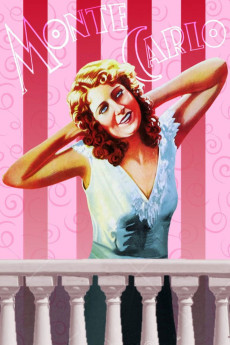
Monte Carlo

1930

Comedy / Musical / Romance
2
Rotten Tomatoes Audience - Upright 70% · 100 ratings
IMDb Rating 6.6/10 10 1600 1.6K

Director

Top cast

Jack Buchanan as Count Rudolph Farriere
Bess Flowers as Bridesmaid
Zasu Pitts as Bertha
Sidney Bracey as Hunchback at Casino
720p.BLU 1080p.BLU
830.04 MB
1280*1056
English 2.0
NR
Subtitles us  
23.976 fps
1 hr 30 min
Seeds 39
1.5 GB
1310*1080
English 2.0
NR
Subtitles us  
23.976 fps
1 hr 30 min
Seeds 98

Movie Reviews

Reviewed by 6 / 10

"One smile, one word, one thrill"

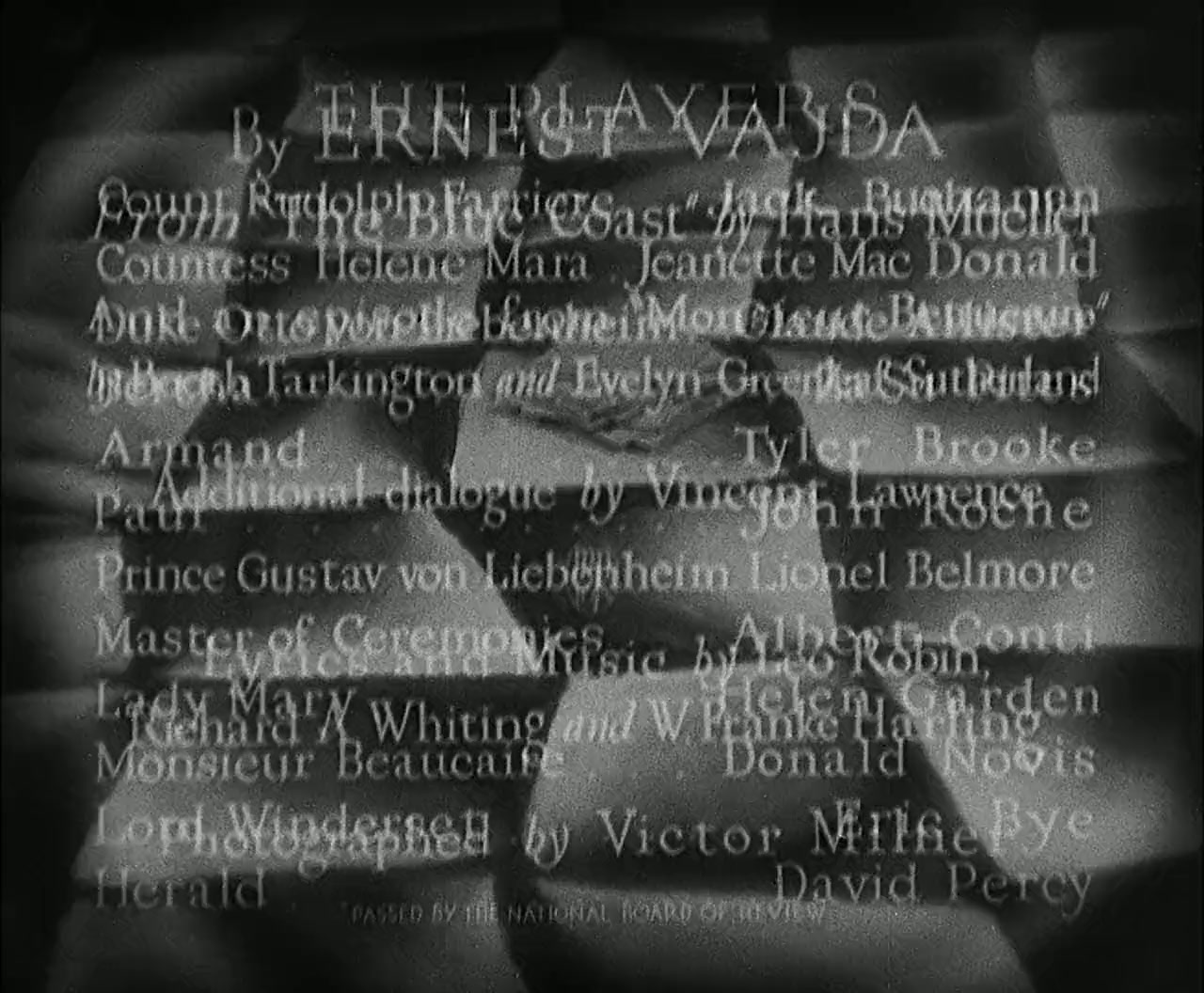
The 1930s were the era of the screen partnership. If a duo worked in one picture, the rule was to keep them together, turning out hits until the public got bored. But it wasn't always a rule producers were able to stick to. After the massive success The Love Parade, which united stars Maurice Chevalier and Jeanette MacDonald, producer-director Ernst Lubitsch followed up with Monte Carlo, in which MacDonald had to swap the gallic lothario for English fop Jack Buchanan.Really, it was not so much the sundering of Chevalier and MacDonald that was the problem. MacDonald was a good singer and a decent actress, but there was no unique chemistry between her and Chevalier. No, it is Lubitsch who has been calamitously separated from the French entertainer. In his new breed of operettas for the screen, earliest examples of how we now define the movie musical, Lubitsch's Ruritanian settings and sly humour needed the cheeky continental charm of someone like Chevalier. There is nothing intrinsically wrong with Buchanan – he was witty, graceful, and could be outstanding in the right role (especially The Band Wagon, two decades later) – but he simply doesn't convince as a philandering French count. There may have been some thinking that Buchanan was to stereotypical Englishness what Chevalier was to stereotypical Frenchness. This is quite true, only stereotypical Englishness isn't what's required! But Lubitsch potters along, honing the formula of the new genre. This time around, the songs are written by Richard A. Whiting and W. Franke Harling. The melodies are neither as sweet nor as memorable as those written by Victor Schertzinger for The Love Parade, the only standout being the popular hit "Beyond the Blue Horizon". However, the lyrics by Leo Robin are great fun, with internal rhyming reminiscent of Lorenz Hart, and a fun and occasionally witty wordplay. What's more Lubitsch and his screenwriter Ernest Vajda have done a more elaborate job of weaving the songs into the story, and the action into the songs. A good example is "Give Me a Moment Please", which is staged as a phone call between MacDonald and Buchanan (funny how Scottish those two sound when their names appear side by side). The song not only relates to the characters and the narrative, but the plot is furthered through the song.As for merging action and music, there are some nice touches here which we didn't see in The Love Parade. This is not a dance musical, and yet Lubitsch choreographs dances of ordinary gestures for many of the numbers. Sometimes this is rather blunt and abstract, such as the head turning of the crowd in "She'll love me and like it". Other times it is more subtle and natural, as in "Trimmin' the women". In that song, we see little moves like Buchanan, John Roche and Tyler Brooke all crossing their legs simultaneously, and in the second half of the song making a little dance out of an afternoon tea session. Their movements look natural but also have a musical rhythm to them. This is all important development for the genre.Ultimately though, this is a box of few delights. I'm not blaming it all on Mr Buchanan – he is actually delightful here and there, but he is not able to carry the picture, and the lack of an appropriate lead man shows up the rather lacklustre storyline. The screen musical would continue to develop, and during the 30s it would belong chiefly to the reliable stars who could be associated with a certain formula – Fred Astaire, Bing Crosby, Shirley Temple, Chevalier, MacDonald… stars who were draws in themselves and needed no fine drama or creative direction to make a hit.
Reviewed by 7 / 10

Minor Lubitsch, fun at times

Even minor Lubitsch rates a 7. His comedic sensibility was unique in its poetry and effortless sophistication.One doesn't expect an iron-clad plot in musical comedy, but MONTE CARLO's fails to fulfill even the minimal requirements of the genre. It simply makes no sense and creates no tension, erotic or otherwise. A nobleman falls for a runaway countess, and for absolutely no reason he pretends to be a commoner for the duration of the film.Lubitsch is normally so good at plot construction, it's surprising that this one is so flat. Zasu Pitts, who can be so delightful, makes no impression here. Even the dialogue discouragingly fails to sparkle.The film's other problem is the leading man, Jack Buchanan, who simply doesn't come across well on-camera and has absolutely no chemistry with MacDonald. Compared to the robust, lusty Maurice Chevalier in other Lubitsch/MacDonald films, Buchanan here is fey and sexless. MacDonald does her best, though, and acquits herself well.No Lubitsch film is without its pleasures. It's worth seeing, but it's no MERRY WIDOW.
Reviewed by 7 / 10

The son of a gun ain't nothing but a Count

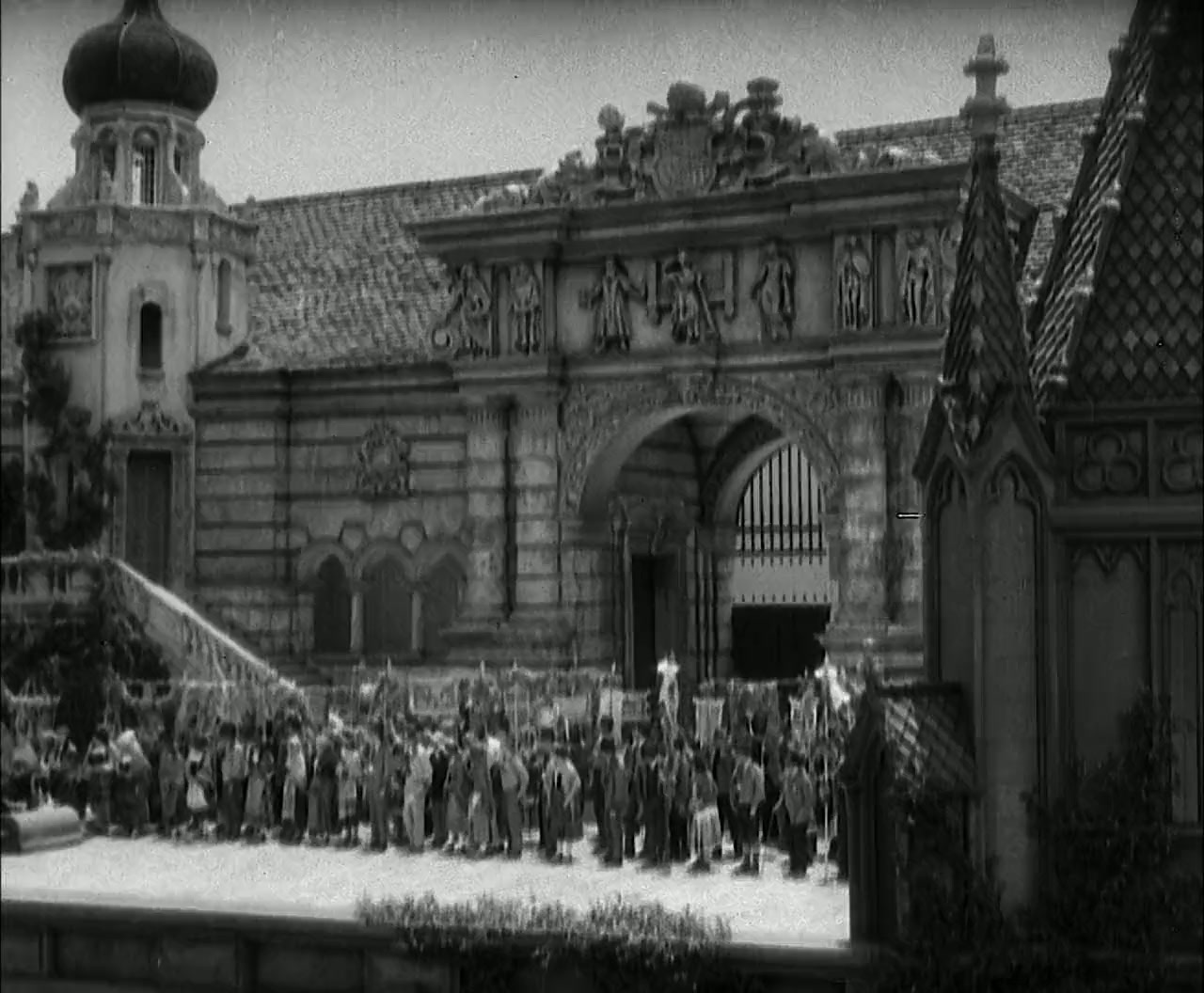
This was Jeanette Macdonald's 4th film in all and 2nd for director Ernst Lubitsch – both getting into their sound-stride and both with many classics still ahead of them, after all – their lives had only begun. Print quality on the DVD is marvellous for a 1930 film, making me wonder why it was never shown on UK TV in the days when they used to cater for people like me.In the gambling dens of Monte Carlo Countess Jeanette pretends to be rich when she's poor and the guy who fancies her, Count Jack, pretends to be poor when he's rich so as to be her hairdresser. Later famous variations in Paramount films were with Chevalier as her (nothing but a) tailor unintentionally masquerading as a Baron in Love Me Tonight directed by Mamoulian and the fake Baron and Countess in the sublime Trouble In Paradise directed by Lubitsch. The story goes in a few unexpected directions but ultimately all's well that ends well – this was the Golden Age of course. Out of the seven songs only Beyond The Blue Horizon and Always In All Ways were truly memorable, but all were listenable to and pleasant. Zazu Pitts was as sadly underused as Jeanette's maid as was Barbara Leonard as Mitzi's in One Hour With You and Jack Buchanan managed to keep it a dark secret why he was such a big star; the film only lost a little momentum at the opera but overall everything worked well. The sets and costumes were relentlessly beautiful – in fact an extremely colourful black and white. Jeanette looked radiant with her gorgeous hair – Roll Over Madonna!A lovely little film and a window on 1930 – it's not a classic but it was another building block for those to come from Paramount in the next few years.
Read more IMDb reviews

1 Comment

Be the first to leave a comment