The Love Parade

1929

Comedy / Musical / Romance

Rotten Tomatoes Critics - Rotten 77% · 6 reviews
Rotten Tomatoes Audience - Upright 77% · 250 ratings
IMDb Rating 7.0/10 10 2887 2.9K

Plot summary

The queen of mythical Sylvania marries a courtier, who finds his new life unsatisfying.

Director

Top cast

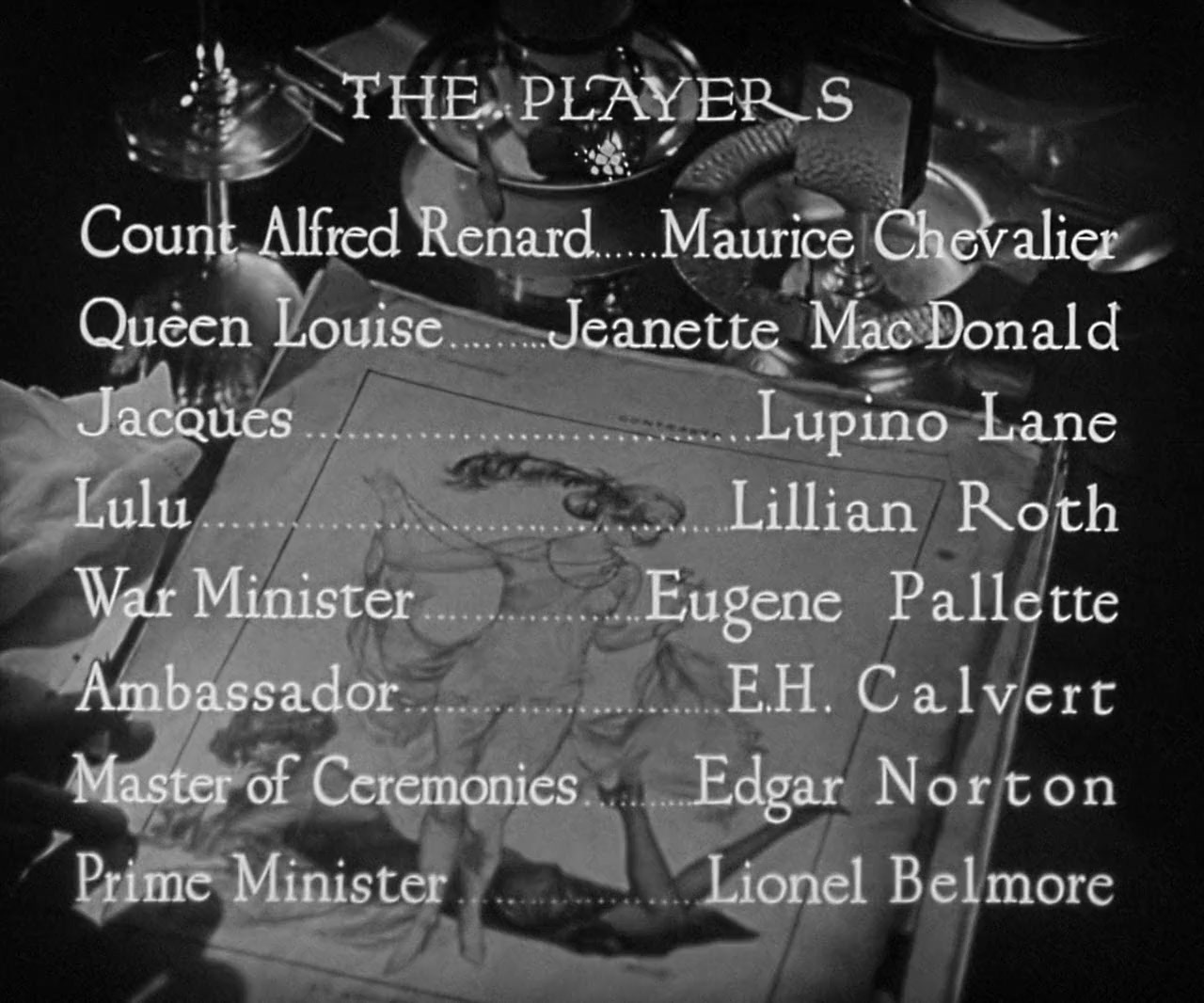
Murdock MacQuarrie as First Radio Announcer
Eugene Pallette as War Minister
Jean Harlow as Woman in Opera Box
Maurice Chevalier as Count Alfred Renard
720p.BluRay
987.36 MB
1280*1066
English 2.0
NR
Subtitles us  
23.976 fps
1 hr 47 min
Seeds ...

Movie Reviews

Reviewed by 6 / 10

A forgotten musical parfait with much to enjoy

An early musical (Ernst Lubitsch's first talkie), so the sound can be hard on the ears (especially Jeanette MacDonald's high notes). The plot as such is forgettable, but see it for the performances.It seems odd to match Jeanette MacDonald's operetta singing with Maurice Chevalier's cabaret, but each gets their own numbers and they join in the middle for duets.Lupino Lane and Lillian Roth do two wonderful vaudeville style song and dance numbers.
Reviewed by 8 / 10

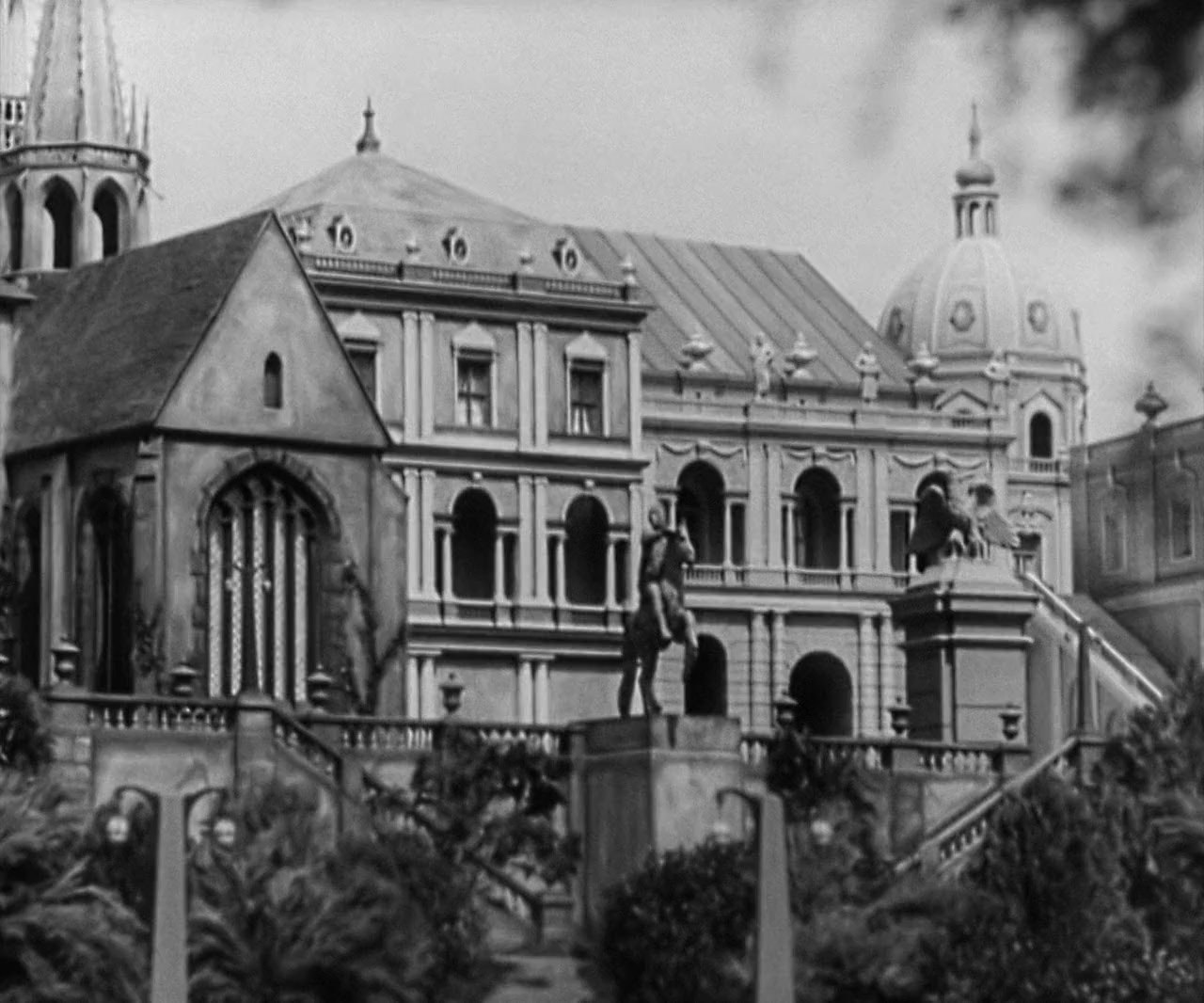
Our first visit to the Kingdom of Sylvania

It was really the film that established Maurice Chevalier and Jeanette MacDonald as a musical comedy team - the first one of the American talkie period. They would make four films in the end (THE LOVE PARADE, ONE HOUR WITH YOU, LOVE ME TONIGHT, and THE MERRY WIDOW). Four first rate early musicals... and they did not like each other! Jeanette rebuffed Chevalier's attempts at a closer relationship (she only liked Gene Raymond, whom she later married). He considered her a prude and hypocrite as a result. So, despite their stunning screen chemistry and string of successes their partnership faded. Nelson Eddy was waiting in the wings for her to find the proper partner.Chevalier is a Count who has been returned from a diplomatic post for a sexual scandal. The country is ruled by Queen Jeanette, and when she meets the charming Maurice she falls for him. They marry, but he finds that (under the guidance of her Prime Minister - Lionel Belmore - and his cabinet) she puts him aside on matters of ruling the state. Chevalier, normally the aggressor in sexual matters and in putting his own ideas out, does not like the self-image of being the boy-toy husband of the ruler of his native country. His idea would be more like that of Prince Albert, Queen Victoria's husband, who became her chief adviser on political matters after their marriage. Here, however, while everyone is polite to him, they make it clear that constitutionally he is not to be involved in running the government.The film is a charming one - full of those "Lubitsch touches". For example, Chevalier's growing anger and impatience at his political uselessness is first shown when he asks one of the courtiers (who has just politely put him in his place), "Do you understand French?" "No, I'm afraid I don't.", says the courtier. Chevalier, with perfect timing, shoots out a long, furious diatribe of French, which one can tell is gutter language, to show his fury at his position - much to the dismay of the courtier. Later on, when the Prime Minister also puts down Chevalier's attempts at advice, he smiles and asks the Prime Minister, "Excuse me, but do you speak French?" Belmore looks at him puzzled, "Yes I do speak French." With an eat dirt smile, Chevalier says, "What a pity!" In the end, it is a financial crisis (which with typical Lubitsch humor can only depend on the foreign investors in Sylvanian securities, all of whom have to observe the reactions of the Afghan Ambassador - bearded Russ Powell - to a court function) that gives Chevalier his chance. Chevalier will only show his true love for his wife if she and the cabinet give him a voice in public affairs like Prince Albert had. And they give in.It would not be the last visit Hollywood paid to Sylvania. Unlike other Balkan pseudo-states, it actually reappeared four years later, though under more "sinister" circumstances. In 1933 the Sylvanian Ambassador to a neighboring country tried to use underhanded means to bring about it's annexation by his homeland. However, Ambassador Trentino (Louis Calhern) did not count upon the Dictator of Freedonia (Rufus T. Firefly - Groucho Marx) and his three brothers to force him to surrender in a barrage of vegetables and fruit in DUCK SOUP.
Reviewed by 7 / 10

pioneering film musical

Poor Queen Louise – when she is awakened by her attendants she has been dreaming of love but must face another day in the Kingdom of Sylvania without a husband. When an errant military adjutant is recalled from Paris to face her censure she falls for his charms and he for hers, and they marry. But the Queen's new husband is unhappy in the role of obedient consort. Conflict arises but is eventually resolved, as we know it will be in operetta land. This early Lubitsch musical rates about the same as MONTE CARLO made a year later. The highlight here is the performance of Maurice Chevalier as the consort, a sort of pre-Cary Grant Cary Grant, Gallic style. He has the same effortless magnetism and charm and a certain physical resemblance. Jeanette MacDonald is as good here as in MONTE CARLO, handling songs and dialogue with equal aplomb and looking gorgeous in her filmy gowns. As is usual with Lubitsch, there is a superior supporting cast, here including the formidable Lupino Lane as Chevalier's valet, a sassy and brassy Lillian Roth as Lane's love interest and Edgar Norton as the "Master of Ceremonies," the personification of royal lackey. Another Lubitsch hallmark, the measured depiction of ritualistic daily activities, gets much display in the context of the protocols of a royal palace. The songs by Victor Schertzinger and Clifford Grey are only passable and the primitive sound recording doesn't help in getting them across but the tone of the whole enterprise is so frothy and pleasant that one doesn't mind not hearing all of the lyrics. When you compare this film to other musicals from the dawn of the sound era like Broadway MELODY the difference is glaring. Lubitsch's camera is liberated and fluid and we get an assortment of physical approaches to song and dance numbers which themselves vary in style from pompous operetta-military to musical hall slapstick to Gilbert-and- Sullivanesque call-and-repeat choral to intimate romantic duets. There is a hint of LOVE ME TONIGHT in some of the ensemble work, particularly with the palace staff. And the script is studded with witty observations and clever comic constructions, some via dialogue, some through pure visuals. THE LOVE PARADE illustrates that in 1929 Rouben Mamoulian (APPLAUSE) was not alone among film directors in recognizing the value of sound as an artistic element and in refusing to subordinate the freedom of the camera to the dictates of miking.
Read more IMDb reviews

No comments yet

Be the first to leave a comment