No Chains No Masters

2024 [FRENCH]

Adventure / Drama / History
5
Rotten Tomatoes Audience - Upright 91%
IMDb Rating 6.3/10 10 856 856

Top cast

Benoît Magimel as Eugène Larcenet
Vassili Schneider as Baptiste
Camille Cottin as Madame La Victoire
Félix Lefebvre as Honoré Larcenet
720p.BLU 1080p.BLU
896.72 MB
1280*690
French 2.0
NR
Subtitles ro  
24 fps
1 hr 37 min
Seeds 9
1.8 GB
1920*1036
French 5.1
NR
Subtitles ro  
24 fps
1 hr 37 min
Seeds 19

Movie Reviews

Reviewed by marclenglet80 6 / 10

Freedom, Fugitives and the Grammar of Violence

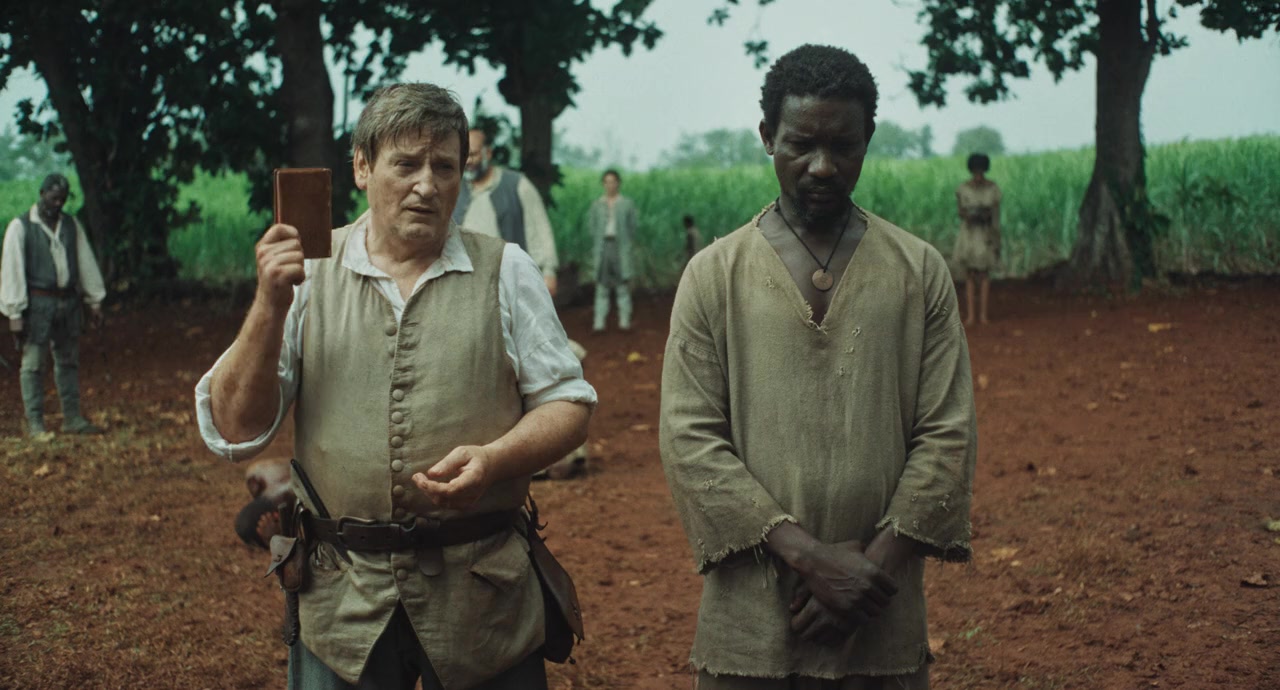
No Chains, No Masters feels like three films stitched into one: first, an unflinching depiction of the appalling conditions endured by enslaved Black people in an 18th-century French colony; then a raw, muscular forest survival thriller in which fugitives are hunted down by a merciless mercenary; finally, a glimpse into the maroon communities formed by escaped slaves in territories beyond colonial reach, where they attempted-fragile, imperfectly-to reconstruct a sense of historical and cultural continuity with their origins. It's an ambitious tonal high-wire act, inserting a pure genre sequence between two historical and dramatic sections, but one that largely pays off.Bolstered by a substantial budget, the central survival segment is hard to fault: brutal, tense and visually striking, it appropriates the sharpest tools of Hollywood genre cinema without succumbing to its emptier excesses or its urge to impress for impression's sake. It's difficult to say which impulse dominates-historical drama or genre filmmaking-so carefully is the balance struck. And that equilibrium seems deliberate: the film clearly wants to draw in viewers who might otherwise shy away from a memorial work addressing slavery in the French colonies, a subject rarely tackled in hexagonal cinema, and perhaps never with such seriousness. The only prior example that springs to mind is Case départ, which approached the issue through partial comedy.Another decision firmly in the film's favour is its refusal to frame its more pedagogical sections as moral lectures, or to simply transpose the American cinematic vocabulary of slavery onto a French historical context-a move that would feel both anachronistic and hollow. Instead, slave owners and their interactions with the enslaved are not filtered through a modern moral lens but re-embedded within the mindset of an ordinary man from three centuries ago, for whom inequality is a foundational principle of society. In his eyes, his actions are not cruel but lawful, necessary to uphold an order he believes himself duty-bound to enforce. Those who begin to articulate doubts about the system's inherent injustice, meanwhile, never quite reach the point where words turn into action. In that moral dead zone-between genre thrills and historical reckoning-the film finds its most unsettling truths.
Reviewed by Mengedegna 5 / 10

Moving in places, but not very convincing

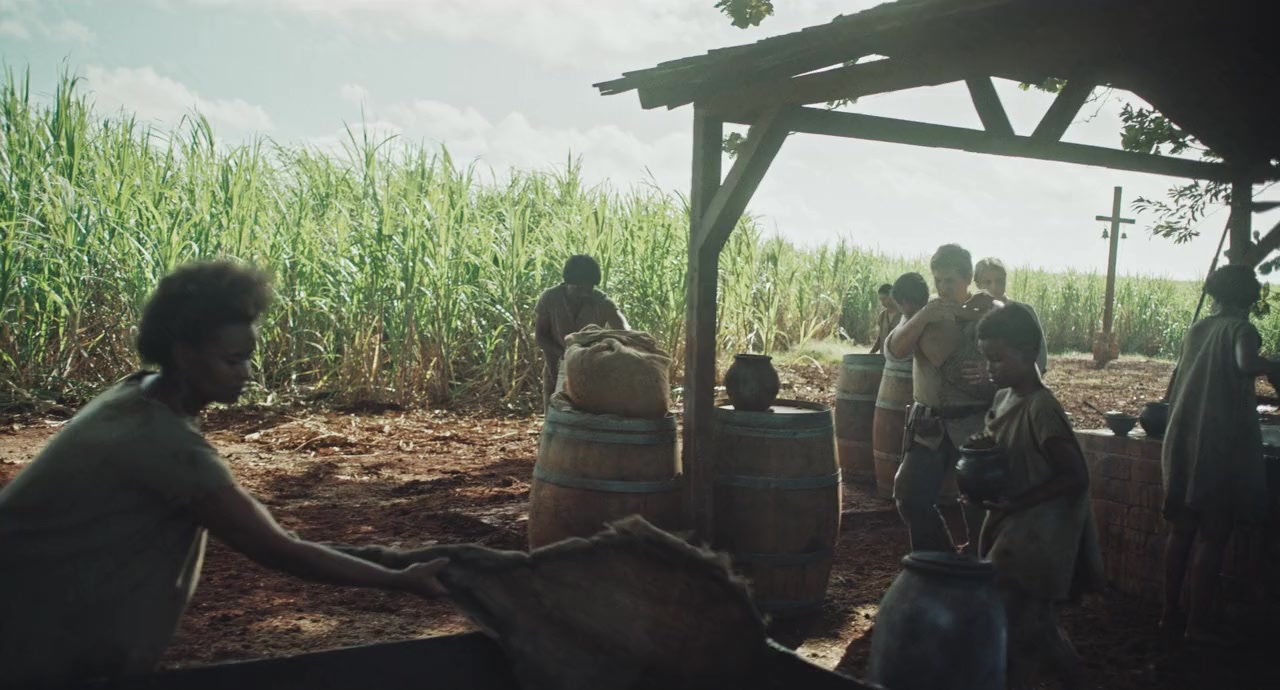
This is an odd film. It builds on the real beauty of the island of Mauritius, implying a high level of realism. It's set during the period (most of the 18th century, up to the British takeover in 1810) of French domination (when it was known as the Isle-de-France) and depicts the horrors of its plantation economy, producing sugar off the backs (with a flogging depicted with sickening realism) of enslaved Africans, all of which is historically accurate. But the actors portraying the victims are from West Africa (primarily Wolof speakers from the area now known as Senegal, but other West African groups are mentioned), which is historically absurd, as the logistics of moving all those humans all those thousands of miles would have made no economic sense. (The enslaved population of Mauritius was of East African and Malagasy origin.)These absurdities aside, and despite some outstanding acting, mainly by the two Senegalese protagonists, Ibrahima M'Bayi and Anna Diakhere Thiandoum, the plot is much too heavy-handed. Colette Cottin appears to be a fine actress, but casting her as white female hunter of escaped "maroons" is too preposterous to be sustained. Benoît Magimel , one of the finest actors in present-day French cinema, is here cast as a wealthy holder of a large plantation concession who has a few scruples about the fate of his enslaved workforce, but not too many. He has put on many kilos since he was last seen on U. S. screens in another island-based parable, Alberto Serra's "Pacification", a far superior (if often a little too enigmatic) film. Here, he is assigned a role just a step or two above a walk-on, a sad waste of his tremendous talent.The film's intentions -- depicting the dynamics of enslavement on the many islands that produced sugar for the teacups of Europe -- are noble, and the world of those enslaved as seen from their perspective is hugely worthy of cinematic representation, but this film is too jejune, melodramatic, and uncomfortably situated between realism and nonsense. Are there really no Mauritian actors, speaking the island's form of Creole, that the producers had to bring in Wolof speakers from the opposite ends of the African world? The point may be that there are commonalities between the plantation system on Mauritius and on the Caribbean islands (where many of the enslaved would originally have been forcibly transported from Senegal and the rest of West Africa) that a bit of poetic license is permissible? But if I were from Mauritius, and a descendant from the groups that really were enslaved there (now a minority, whereas the island's current majority has its origins on the Indian subcontinent, whose ancestors were brought in by the British as indentured plantation workers) , I would feel insulted. Mauritius is a real place (of amazing beauty, as shown here), with its own specific history, and it deserves to be represented as such, not as an abstraction. The blurring of those two lines gives the film a silliness that the subject matter does not deserve, worsened by an overcooked and illogical screenplay in which the actors must struggle, with only intermittent success, to be more than gross caricatures.
Reviewed by ulicknormanowen 6 / 10

No retreat no surrender

Read more IMDb reviews

6 Comments

Be the first to leave a comment